
Disrupting the destabilising impacts of organized crime in West Africa
Key Highlights and Milestones from the 'Support to the Mitigation of Destabilizing Effects of Transnational Organized Crime (M-TOC)' Project.

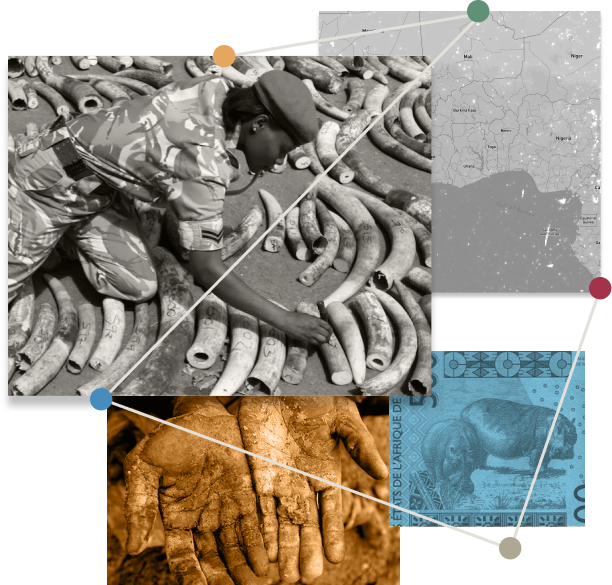
Investigating conflict and crime
Hotspot mapping
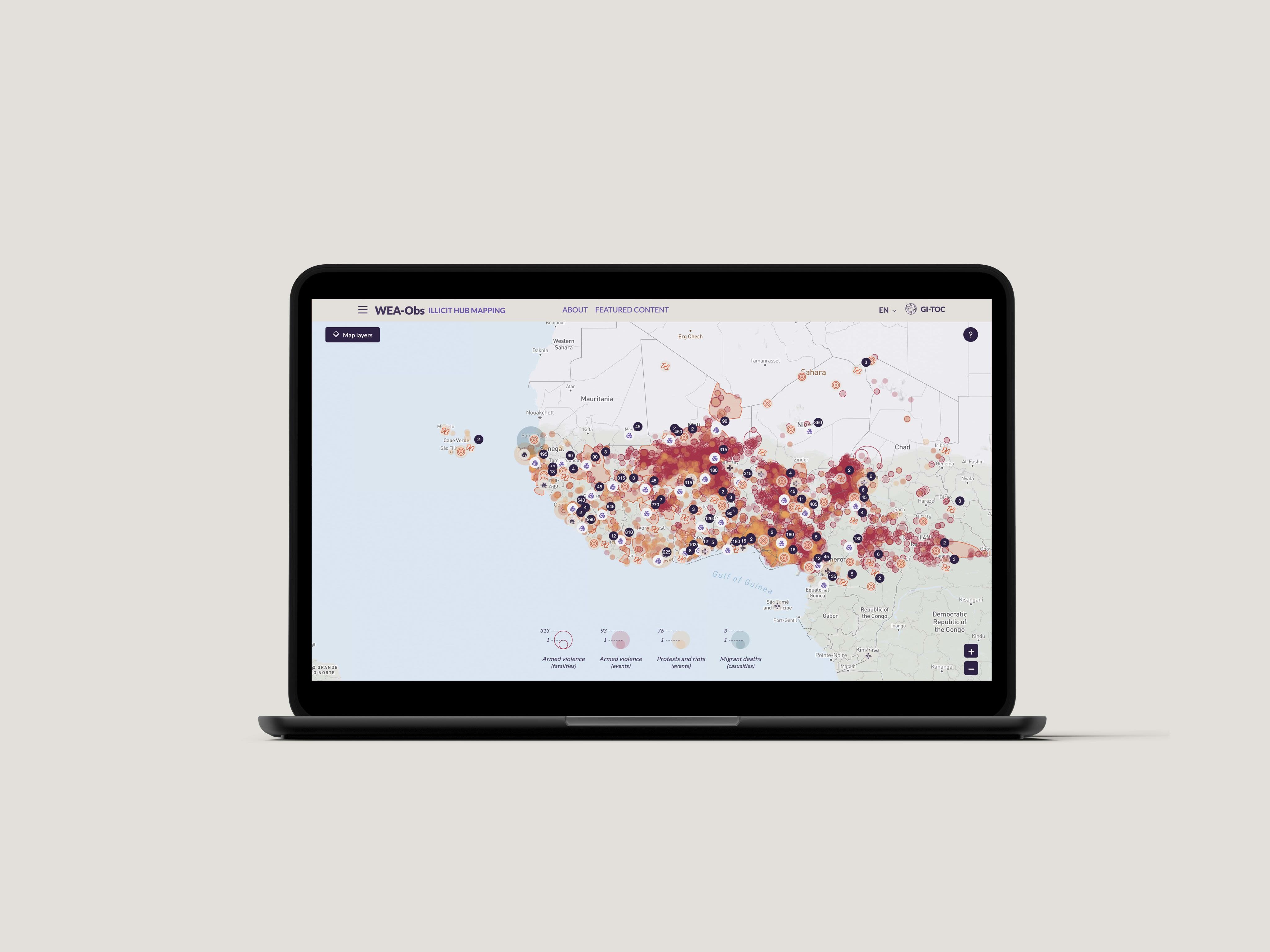
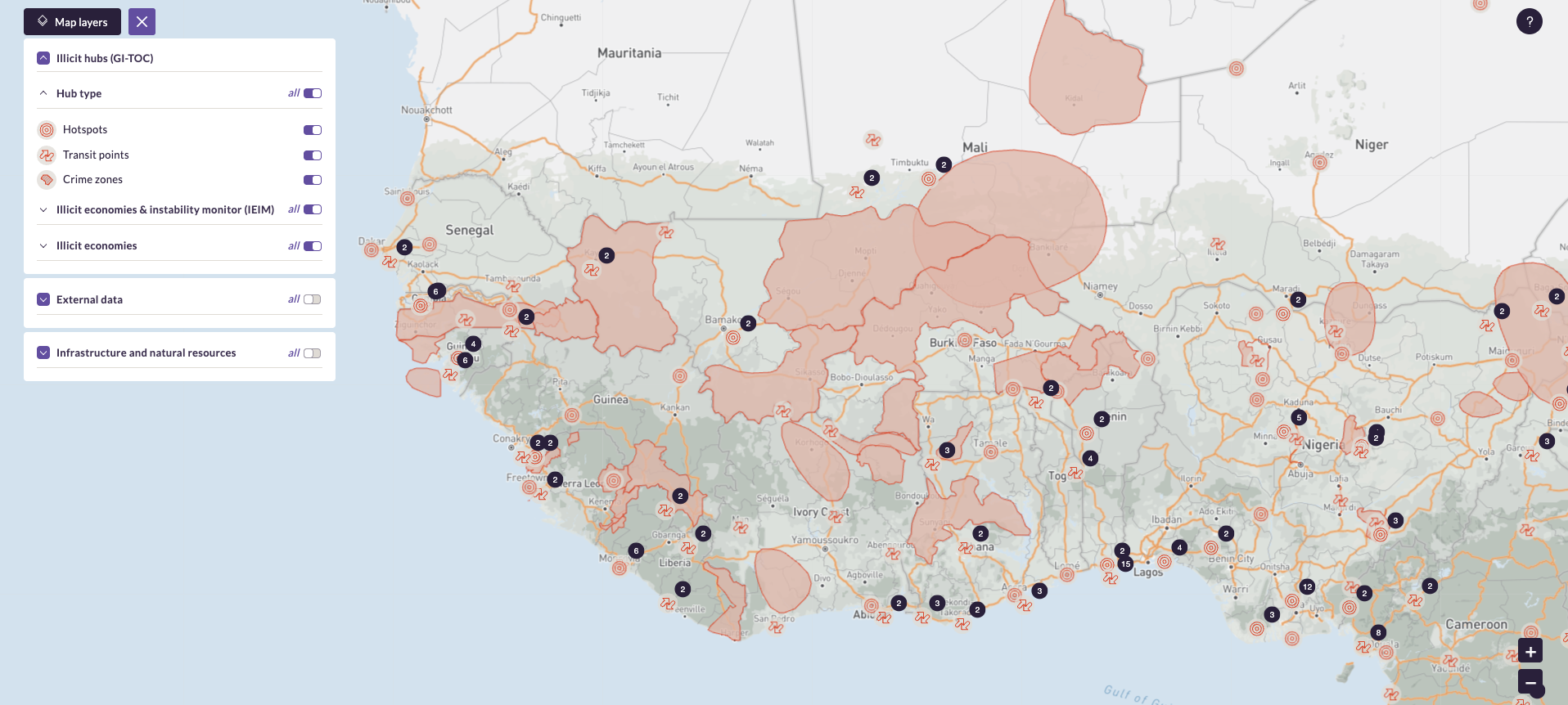
Recognizing the importance of illicit economies within West Africa’s conflict ecosystem, the GI-TOC launched the illicit hub mapping project in 2022. The initial phase identified 280 hubs of illicit economies across 18 focus countries. A quantitative metric, the Illicit Economies and Instability Monitor (‘Monitor’), was then applied to analyze the extent to which the illicit economies in each hub fuelled instability. This assessment was based on 30 indicators, drawing on expert analysis and existing data.
Three years on, the second iteration of the illicit hub mapping project is in the final stages of development. Building on important additions to the Monitor and an extensive existing evidence base, the 2025 edition will capture the most recent trends relating to illicit economies and instability across West Africa.
The updated illicit hub mapping allows for analysis of illicit economy engagement by actor type, as well as a spatial analysis of illicit hubs. It also considers the hubs' instability typologies and their roles within regional illicit ecosystems. As such, it will continue to be an invaluable tool for decision-making, resource allocation and regional analysis.


Unpacking conflict dynamics in the central Sahel
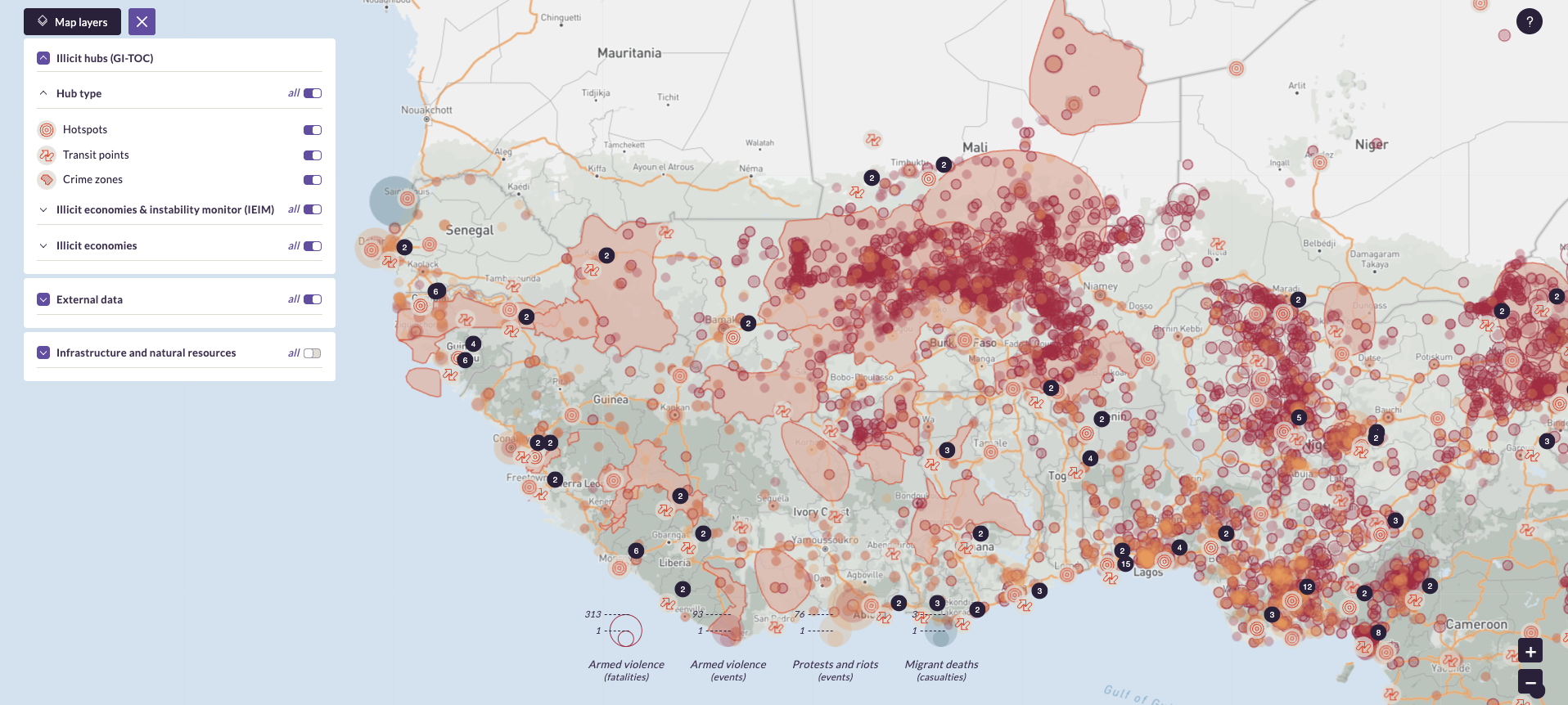
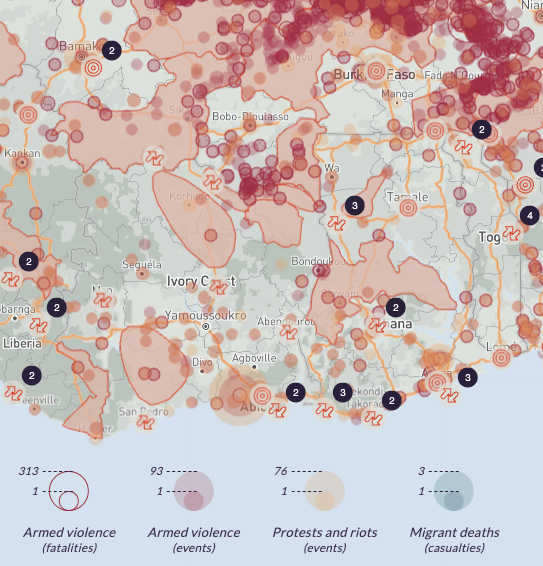
Violence in the central Sahel has reached unprecedented levels. The region is now the global epicentre of terrorism, accounting for over 50% of fatalities caused by violent extremist organizations worldwide. Spiralling atrocities committed by state and state-affiliated actors are further fuelling the crisis. In Mali, for example, state forces and their Russian allies were responsible for 1 486 civilian casualties between January 2024 and March 2025 – almost five times more than Jama’at Nasr al-Islam wal Muslimin (JNIM), the most powerful extremist group in the region. Sahelian conflicts are reshaping smuggling and trafficking ecosystems – from cocaine to migrants and refugees – and driving record numbers of people to attempt the Canary Island crossing, the deadliest migration route in the world.

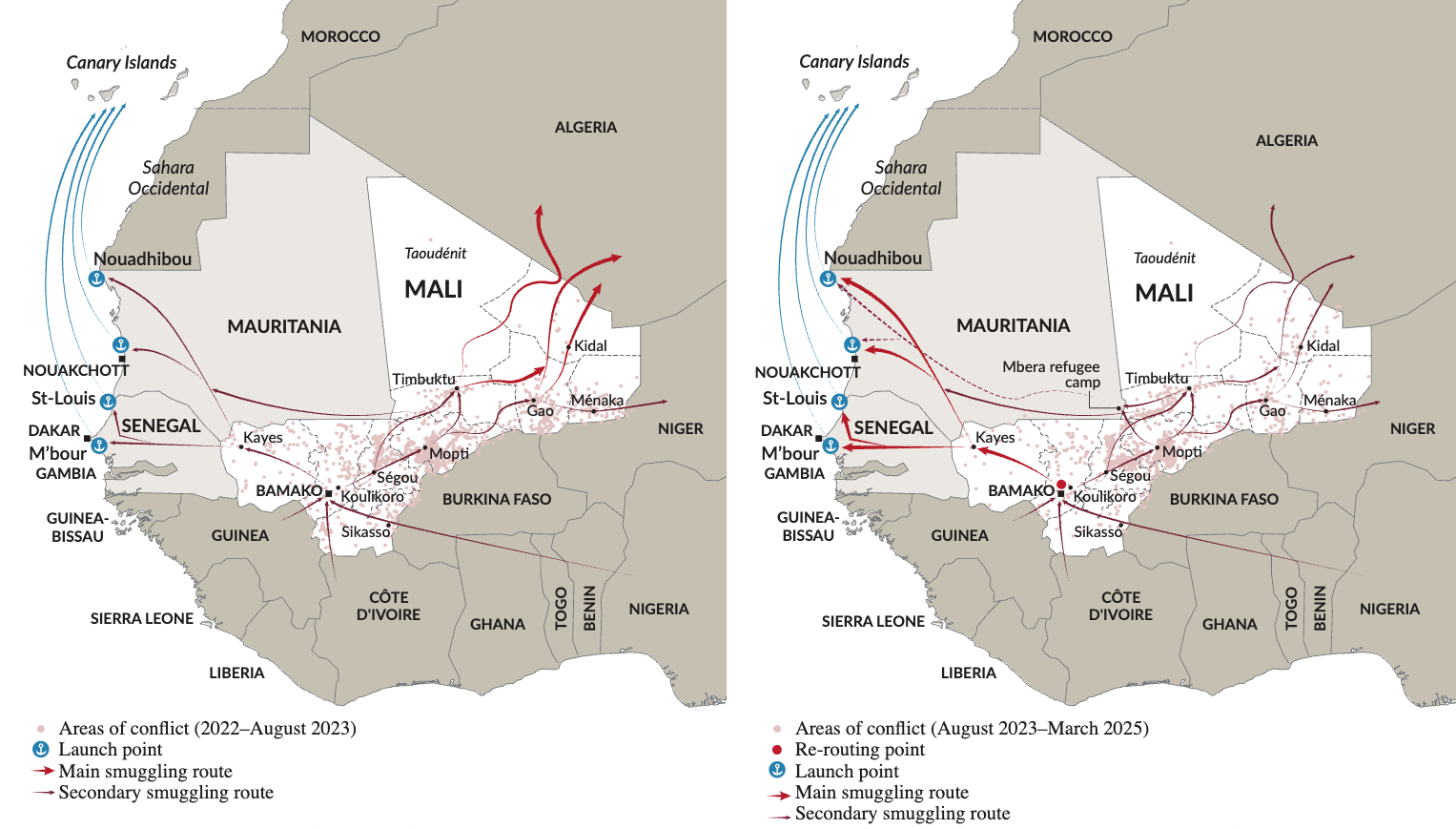
Conflict incidents in the Sahel and changes in migratory routes, 2019–2024.
Conflict incidents in the Sahel and changes in migratory routes, 2019–2024.
JNIM and Islamic State Sahel Province (IS Sahel) continue to operate in northern Benin, Togo, Côte d’Ivoire and Ghana, exploiting key illicit economies for resources, finances and legitimacy. The GI-TOC is tracking how these activities – which range from cattle rustling to arms trafficking and illicit gold flows – feed into conflict. Research is also ongoing into how digital technologies, such as Starlink, are transforming the landscape of crime and combat.

Building civil society responses
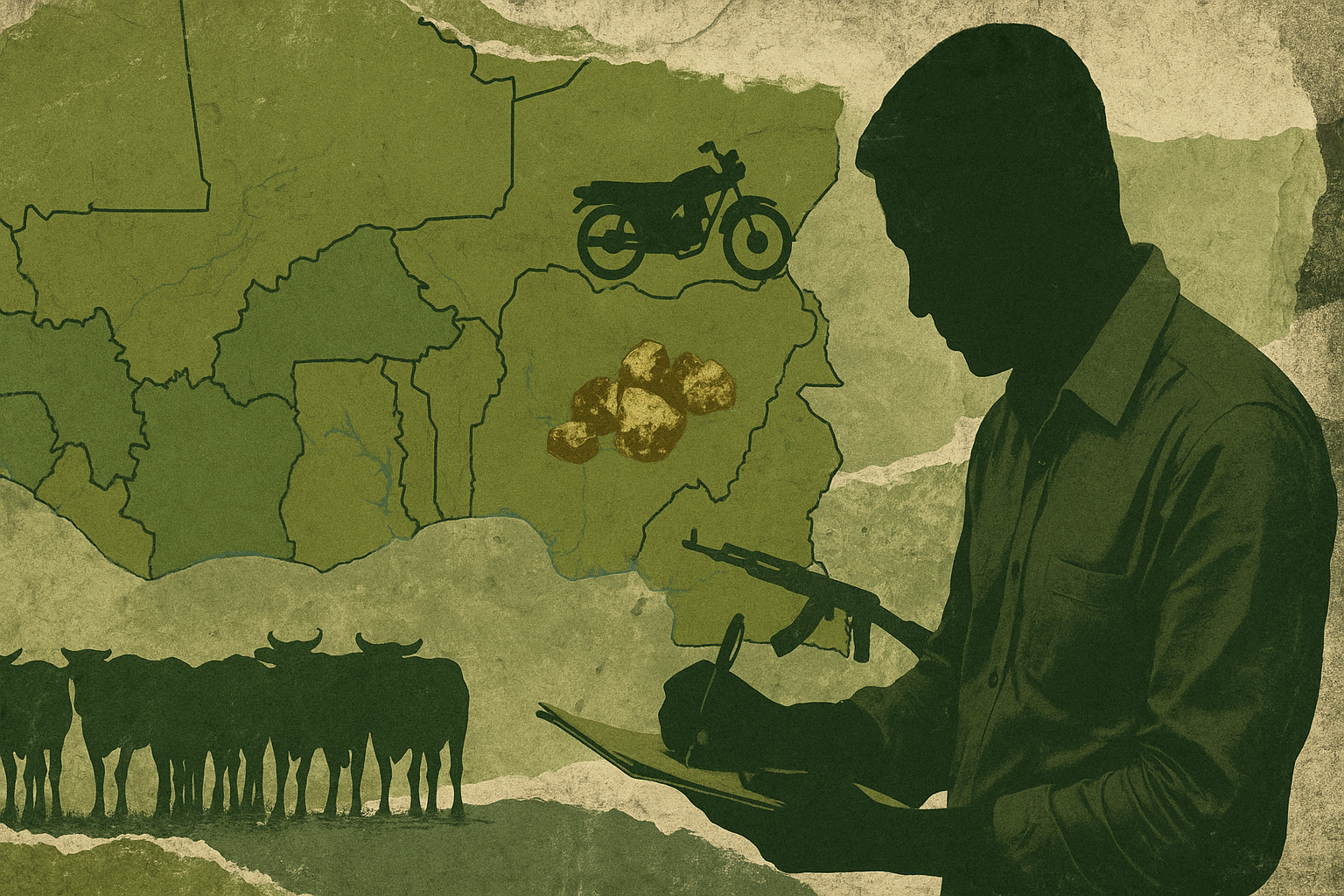
Seven journalists from Ghana, Nigeria, Côte d’Ivoire, Benin and Togo are taking part in the Journalism Fellowship in West Africa, a one-year programme designed to shine a spotlight on the escalating instability in West Africa and develop resilience against organized crime. The fellows are investigating the activities of key criminal actors and the underlying dynamics, with a focus on areas where harm is concentrated. Their work will also examine how bandits, violent extremist groups and state-embedded actors benefit from trades such as cattle rustling, gold smuggling, and arms and motorcycle trafficking.
The fellowship emphasizes the development of journalistic skills. Each fellow has been paired with a journalist mentor and has direct access to GI-TOC experts to support their research. Online knowledge-building sessions form an integral part of the programme, covering broad topics such as the landscape of organized crime as well as specific issues such as fact checking, illicit gold trade, cattle rustling, journalism and resilience, and security. The fellows have also received practical training in pitch formulation, fact-checking and security management. With this support, each participant will publish an article based on their investigations at the end of the fellowship.
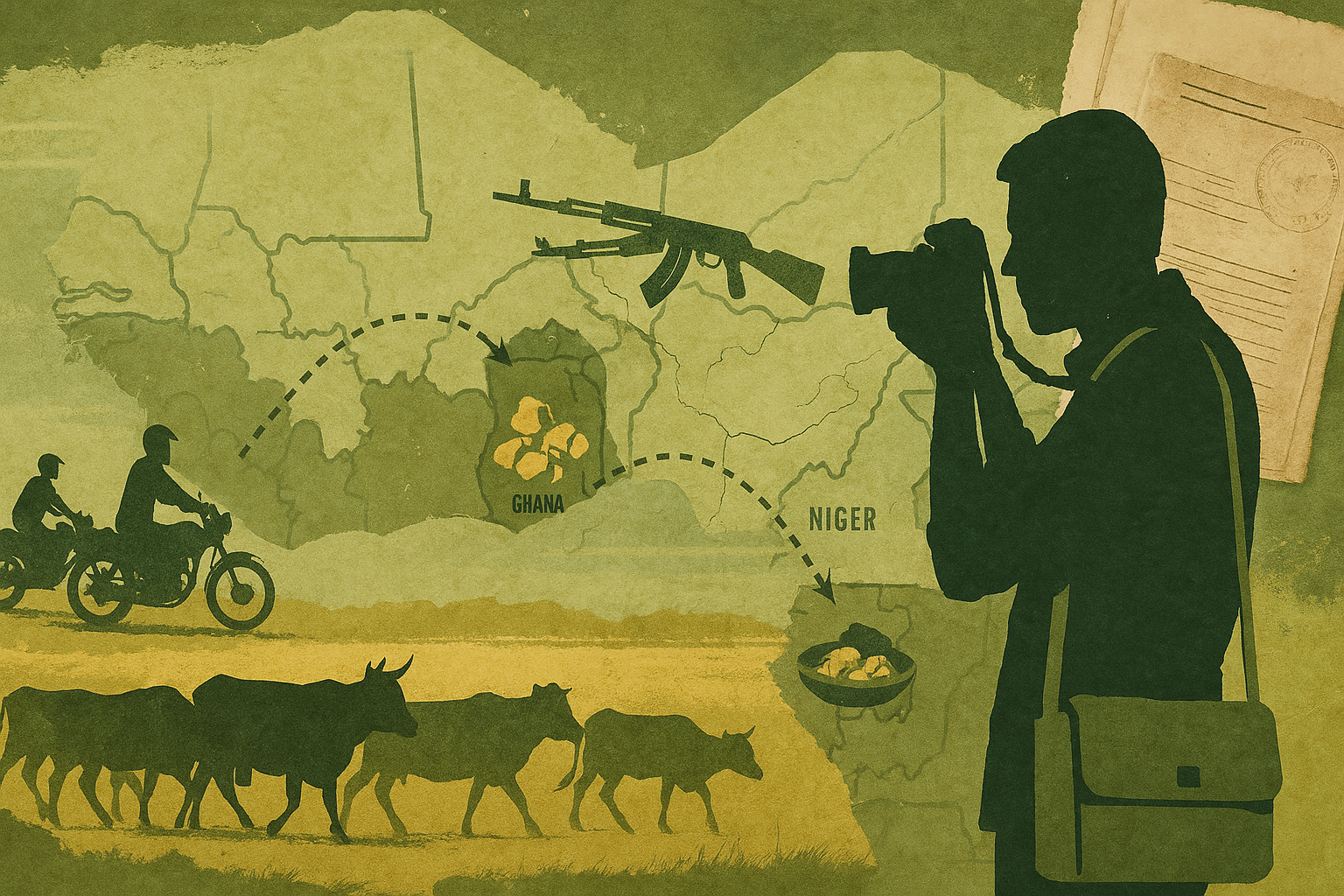
Conflict and crime sensitivity assessment
The area marking the borders between Ghana and its northern and western neighbours, Côte d’Ivoire and Burkina Faso, is home to a range of illicit economies, most prominently artisanal and small-scale gold mining and cattle rustling. With Sahelian armed groups increasingly moving southwards, security concerns have also been triggered in the northern areas of Ghana and Côte d’Ivoire.

GI-TOC researchers spent time with communities in the Upper West region of Ghana and the Bounkani region of Côte d’Ivoire – key areas used by JNIM to launder stolen cattle and gather resources – to hear their perspectives on how illicit economies feed instability and to ascertain what kinds of support could help disrupt these pathways.
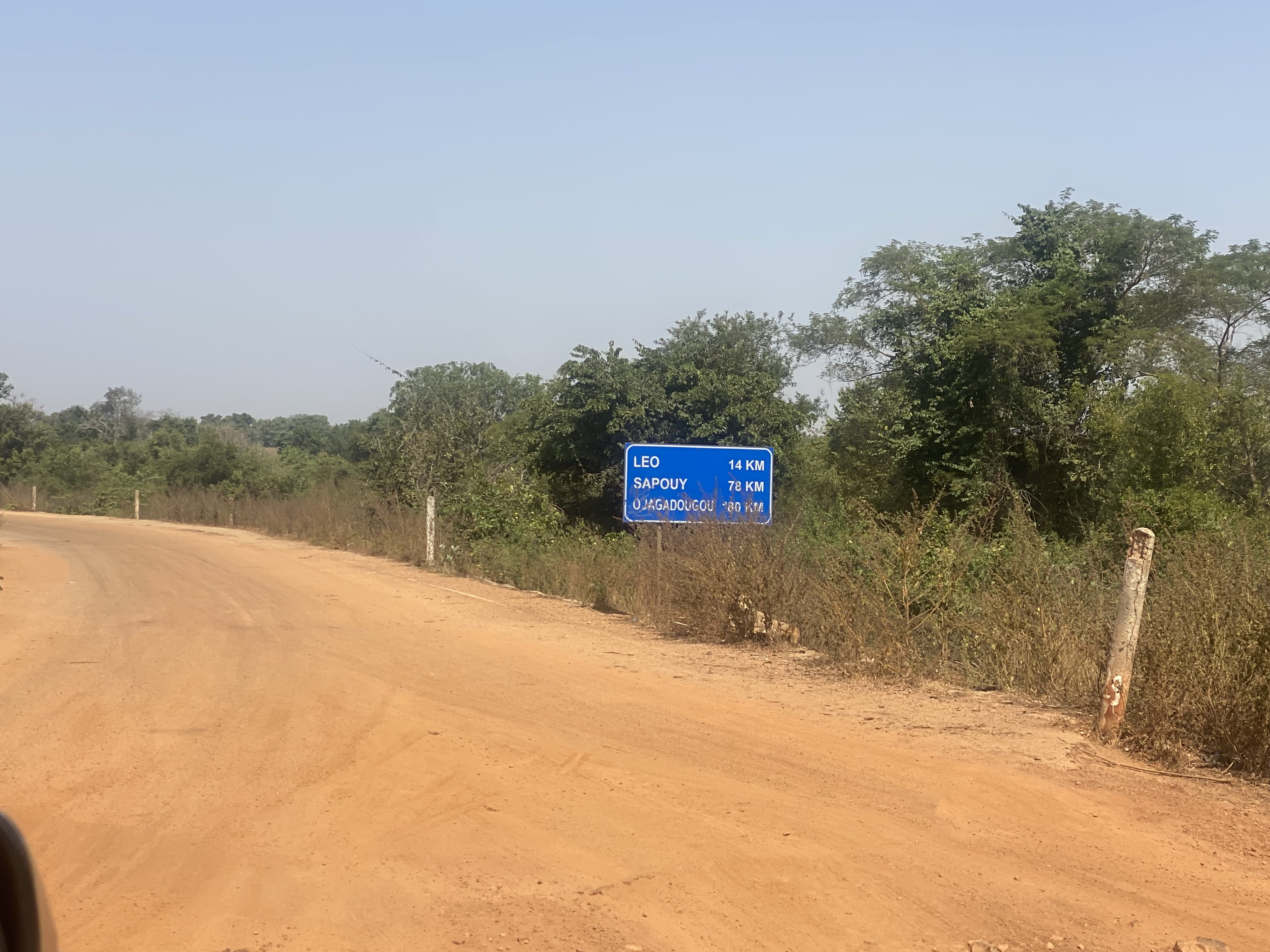
The region’s illicit gold mines and markets also transcend borders, presenting a potential source of financing for violent extremist organization and other armed actors. Research was conducted in northern Ghana and the border areas of Burkina Faso to evaluate the extent of this risk and to identify the actors driving and benefiting from the trade.
These insights were shared with government representatives and GIZ programming specialists in both countries. The intention is to inform programming aimed at building community resilience against the illicit markets that pose the greatest threat to stability.

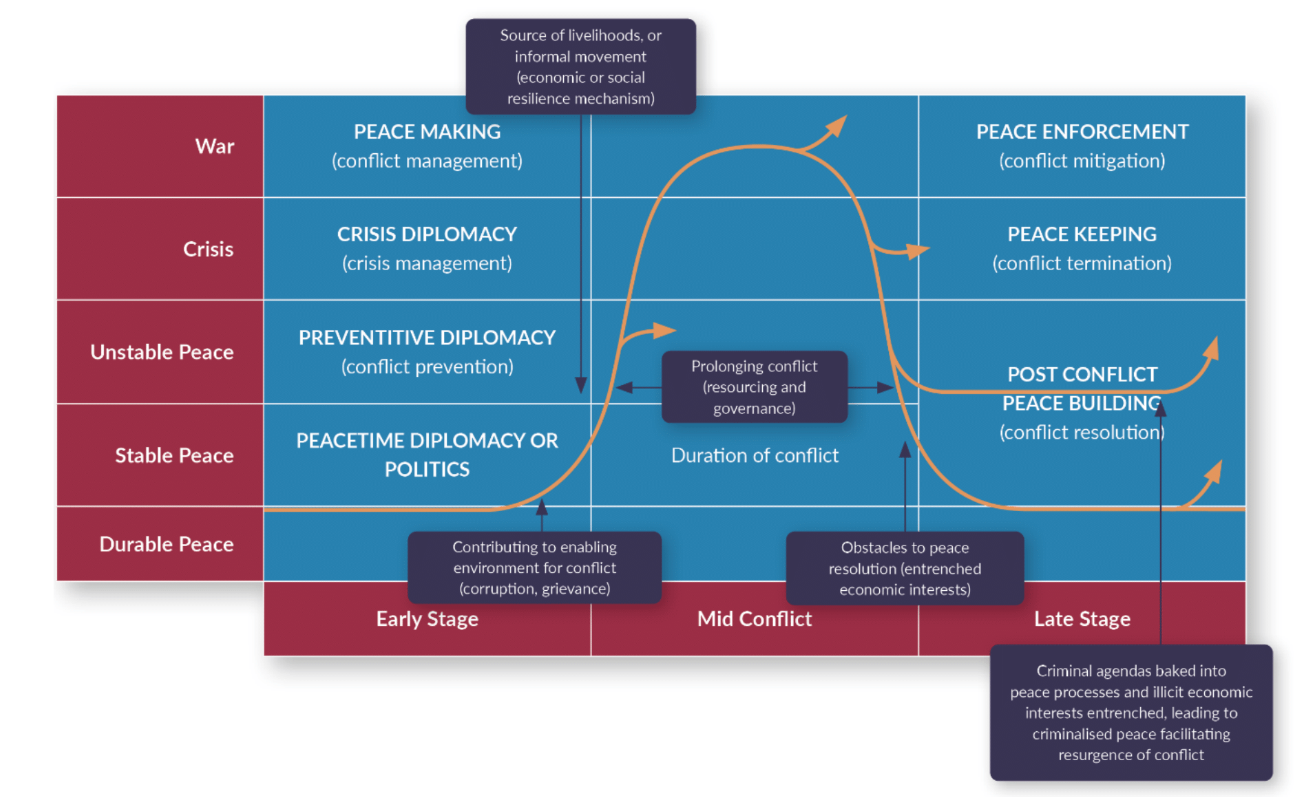
ILLICIT ECONOMY PATHWAYS TO INSTABILITY
ILLICIT ECONOMY PATHWAYS TO INSTABILITY
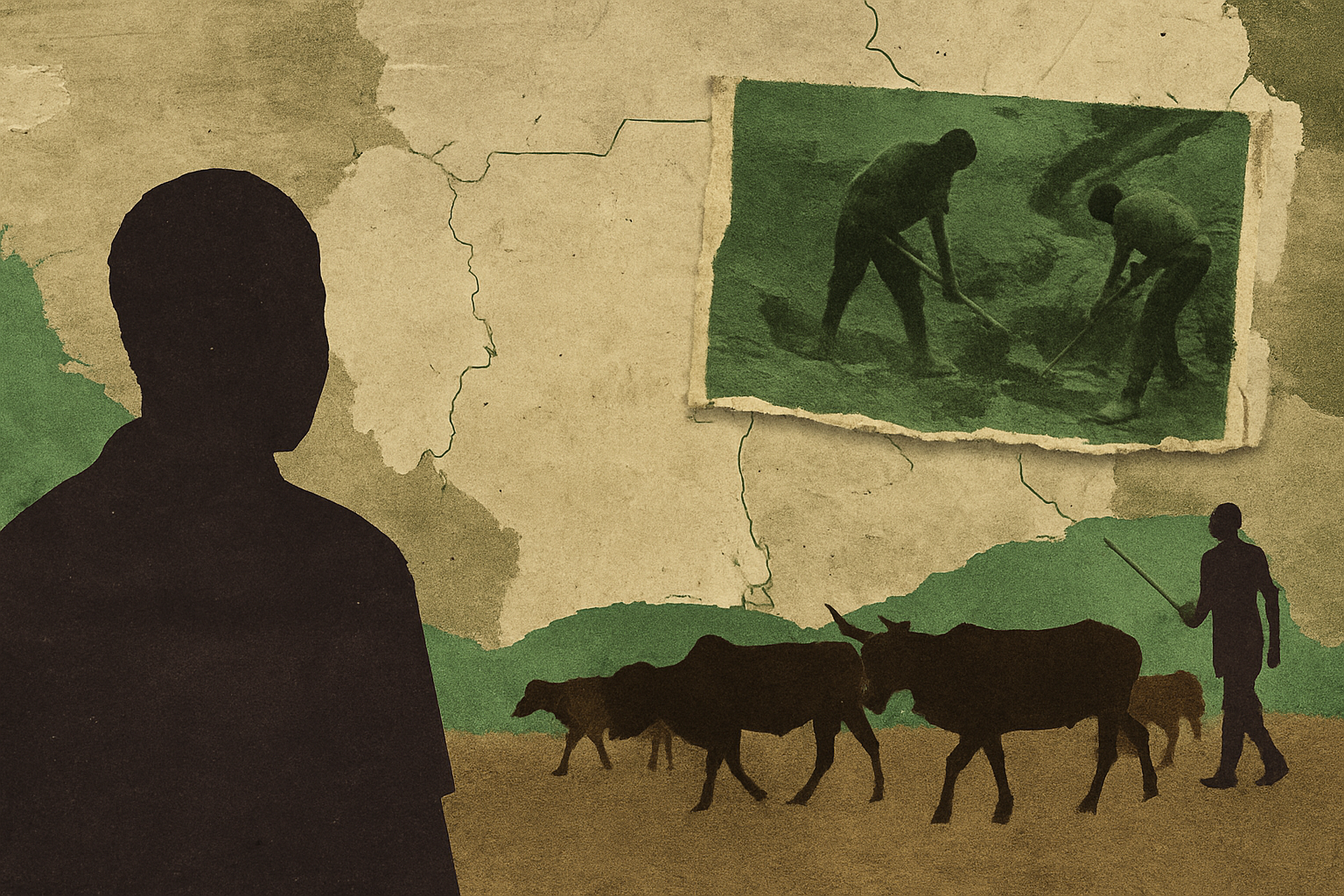
In Focus: Key Markets
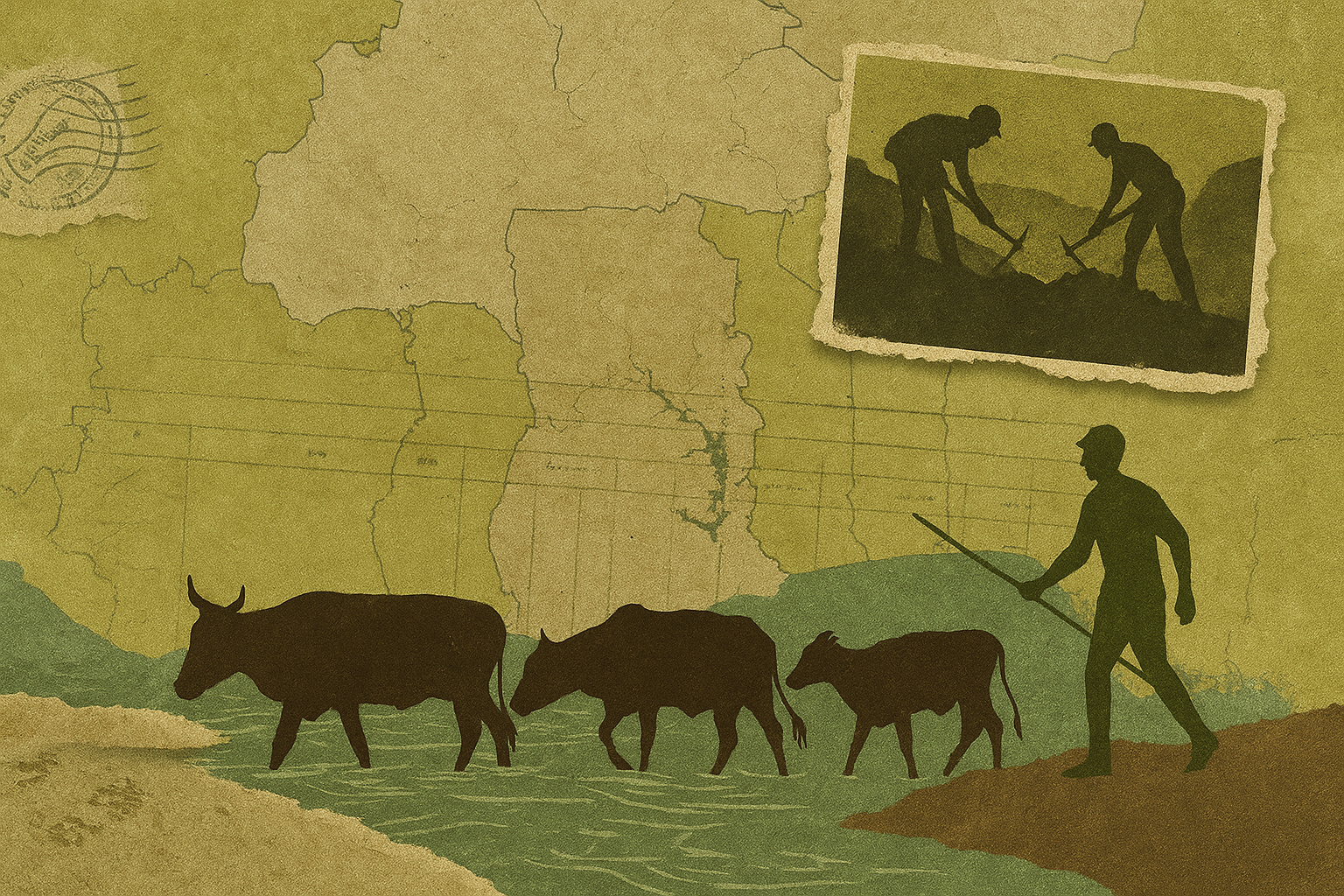
The GI-TOC has strategically focused its work on three criminal markets: cattle rustling, artisanal gold mining and arms trafficking. The first two were studied in the tri-border area between Côte d’Ivoire, Ghana and Burkina Faso, as part of an in-depth analysis of the findings of the conflict and crime sensitivity assessment. The arms trafficking workstream focuses on the Sahel region, particularly Mali, Chad and Libya, investigating the impact of mercenaries on this illicit market.
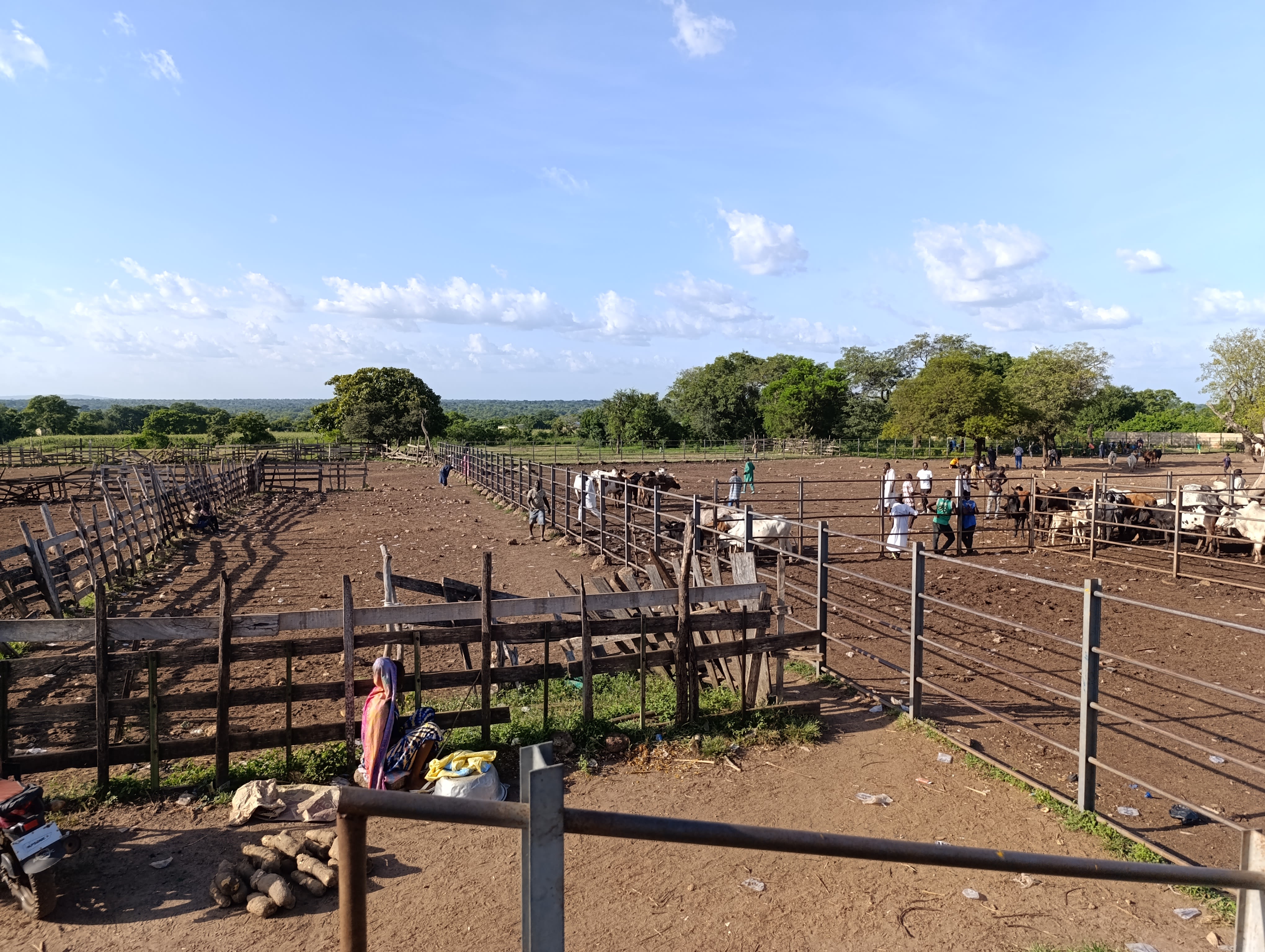
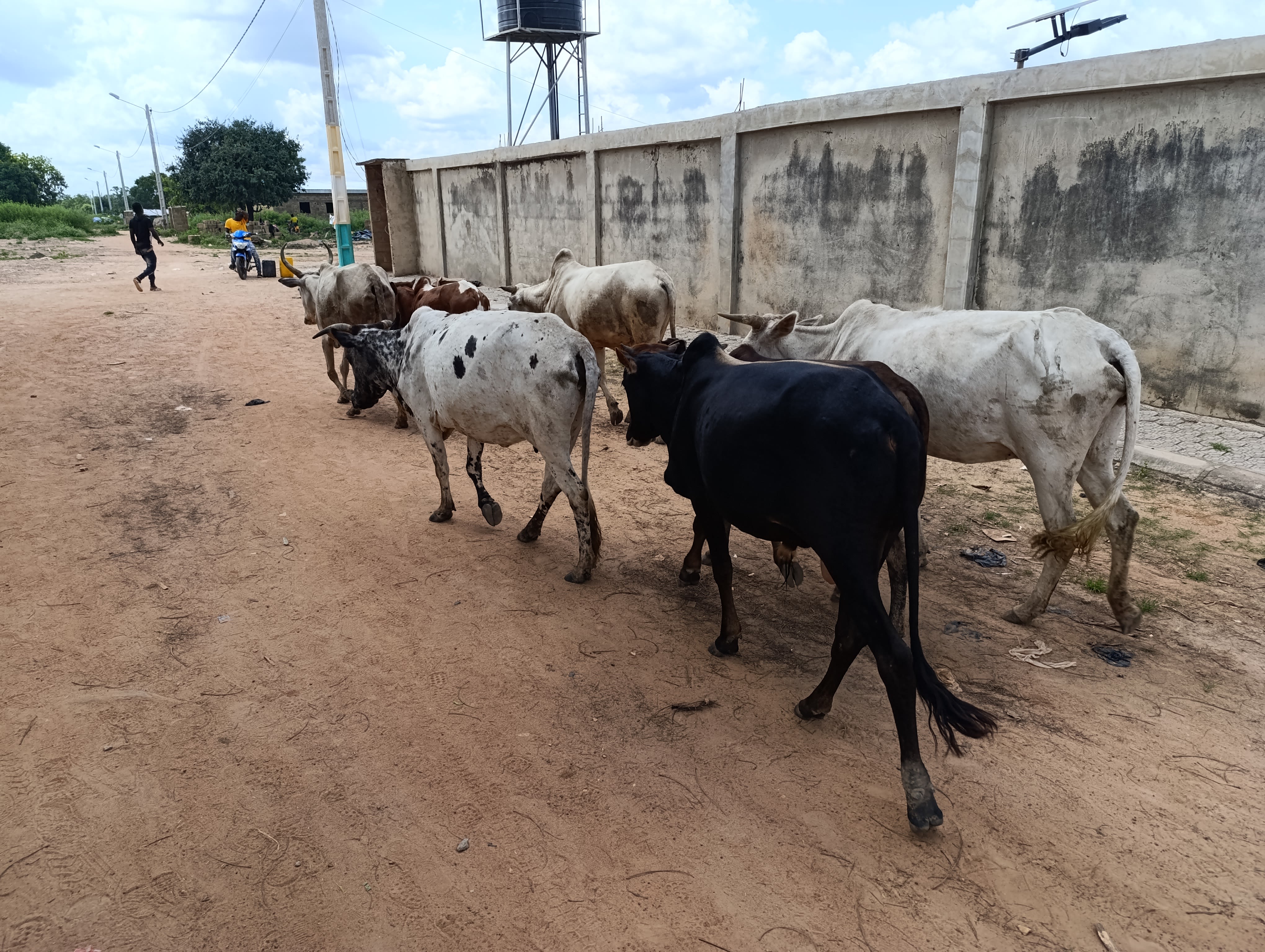
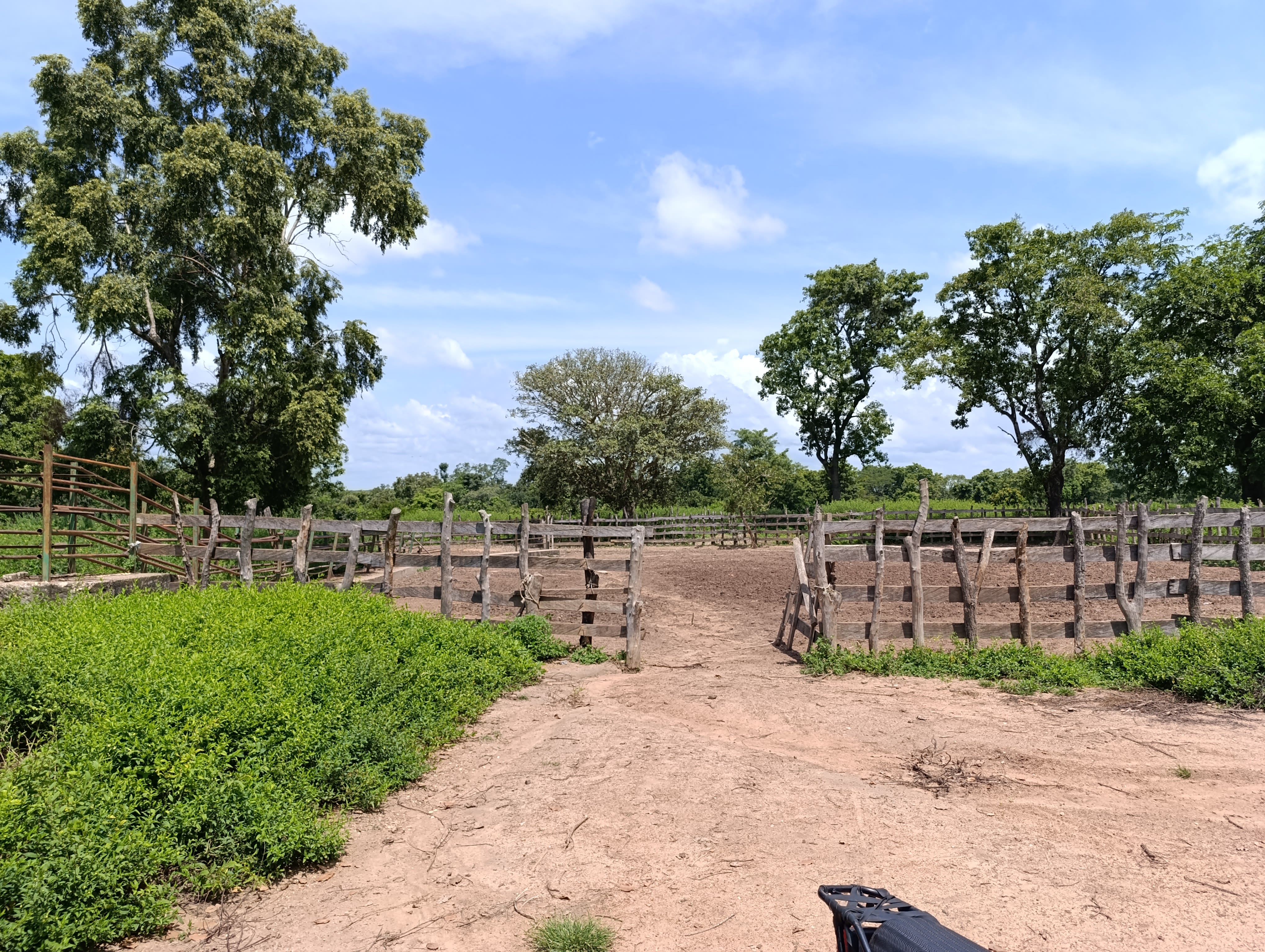
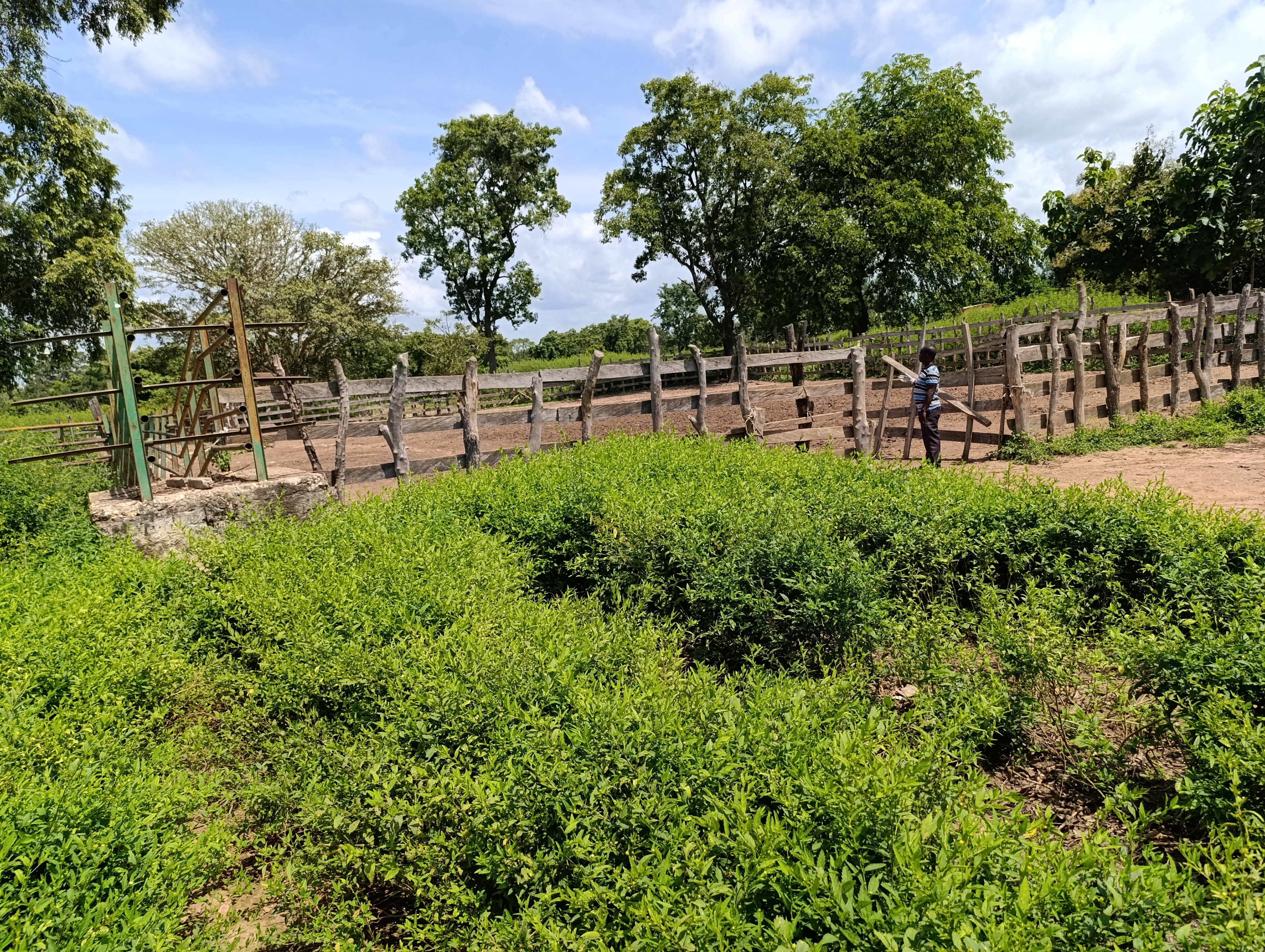
CATTLE RUSTLING

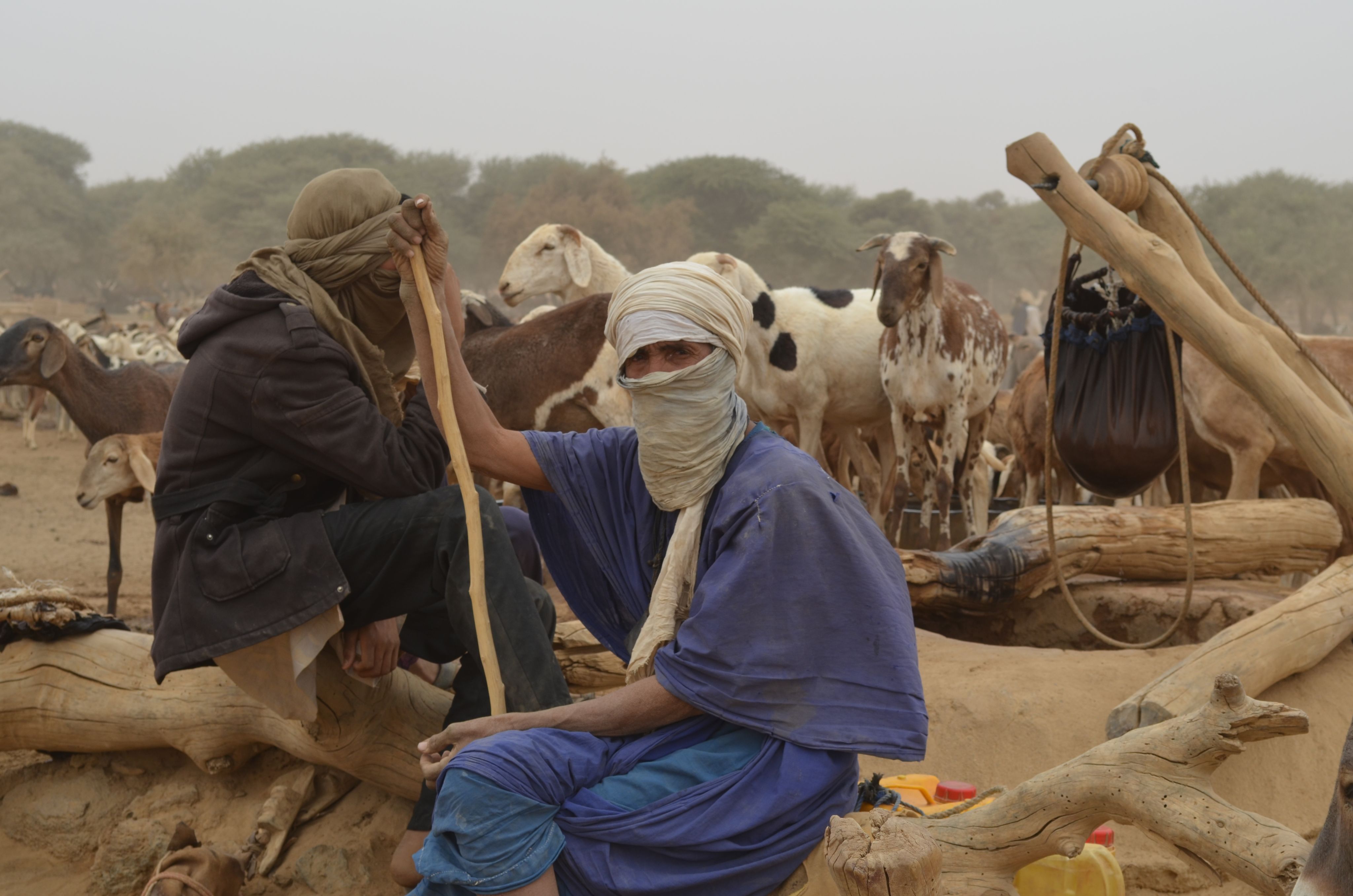
Cattle rustling is a central part of the war economy in West Africa and the Sahel, and the two most powerful Sahelian violent extremist groups - Jama’at Nusrat al-Islam wal-Muslimin (JNIM), an al-Qaeda affiliate, and Islamic State Sahel Province (IS Sahel) - rely on cattle rustling for financing and resourcing.
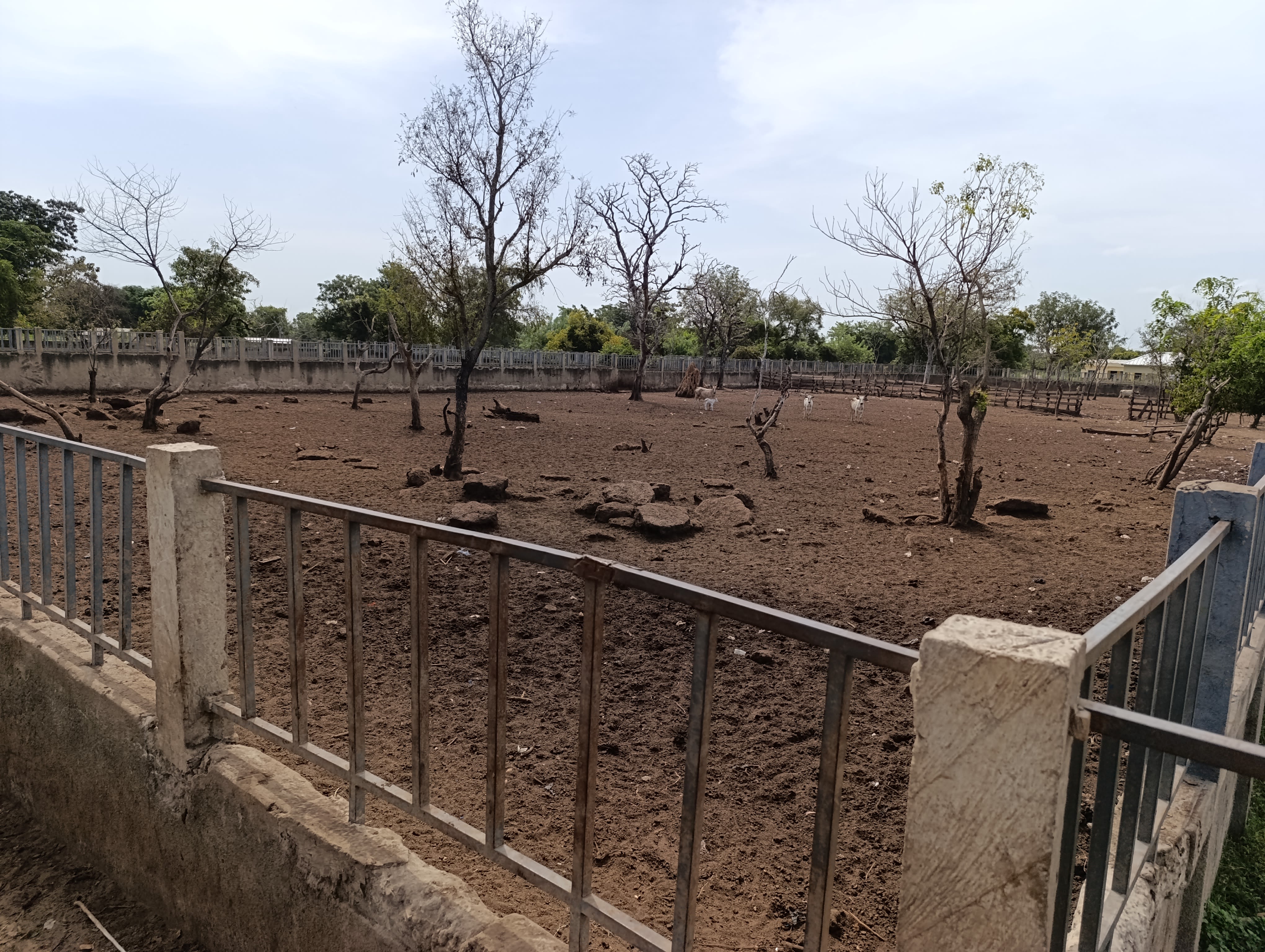
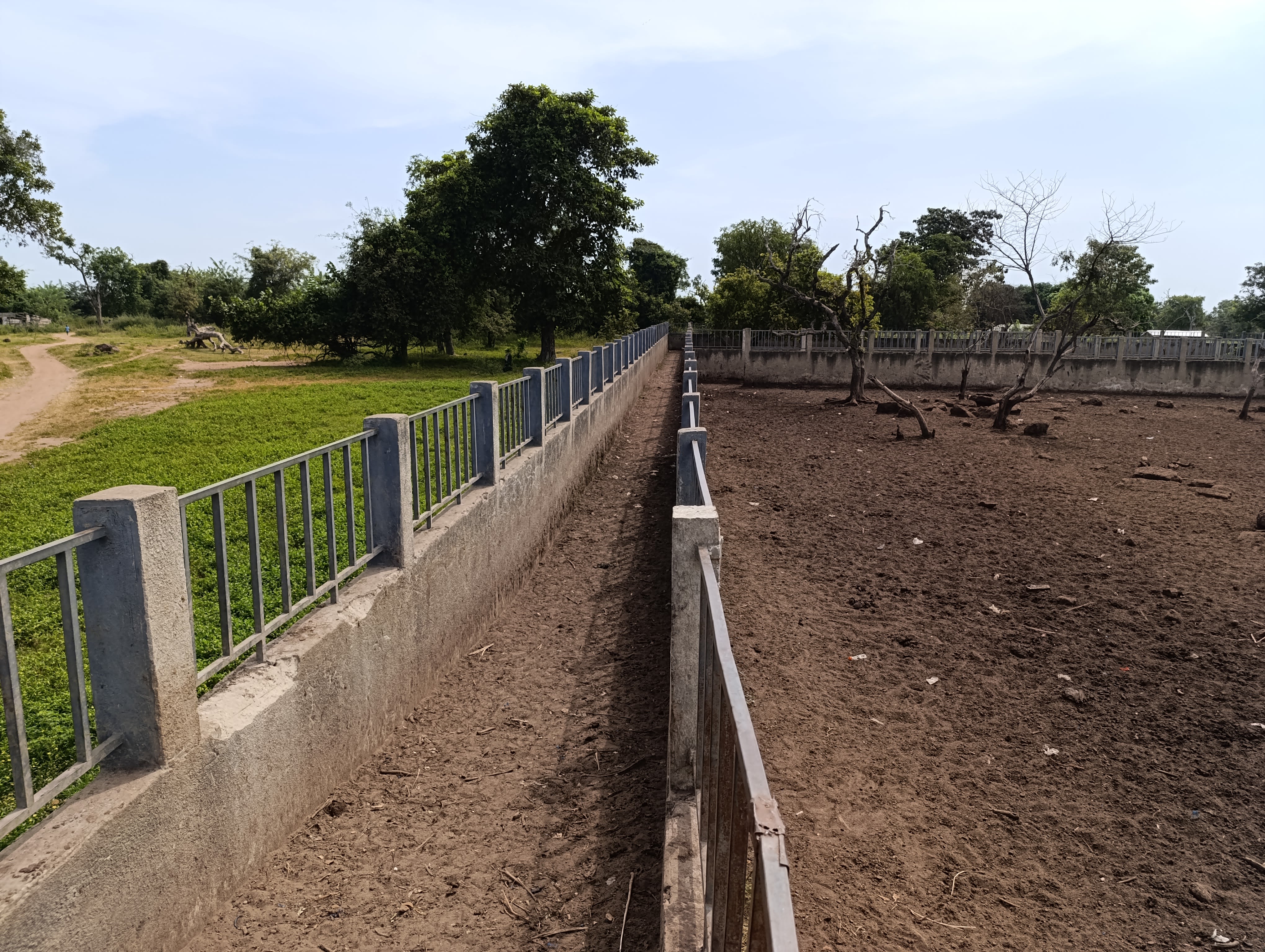
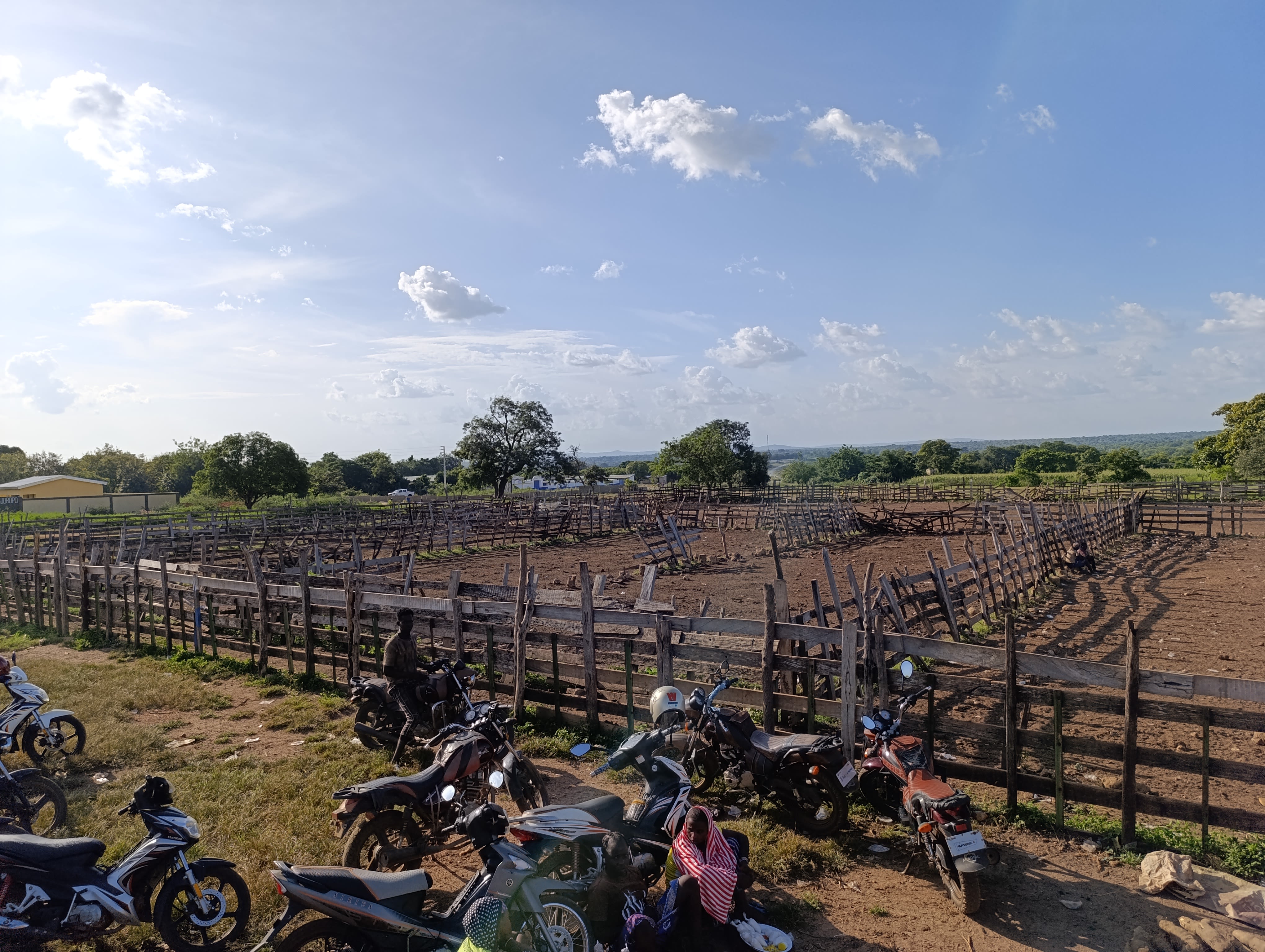
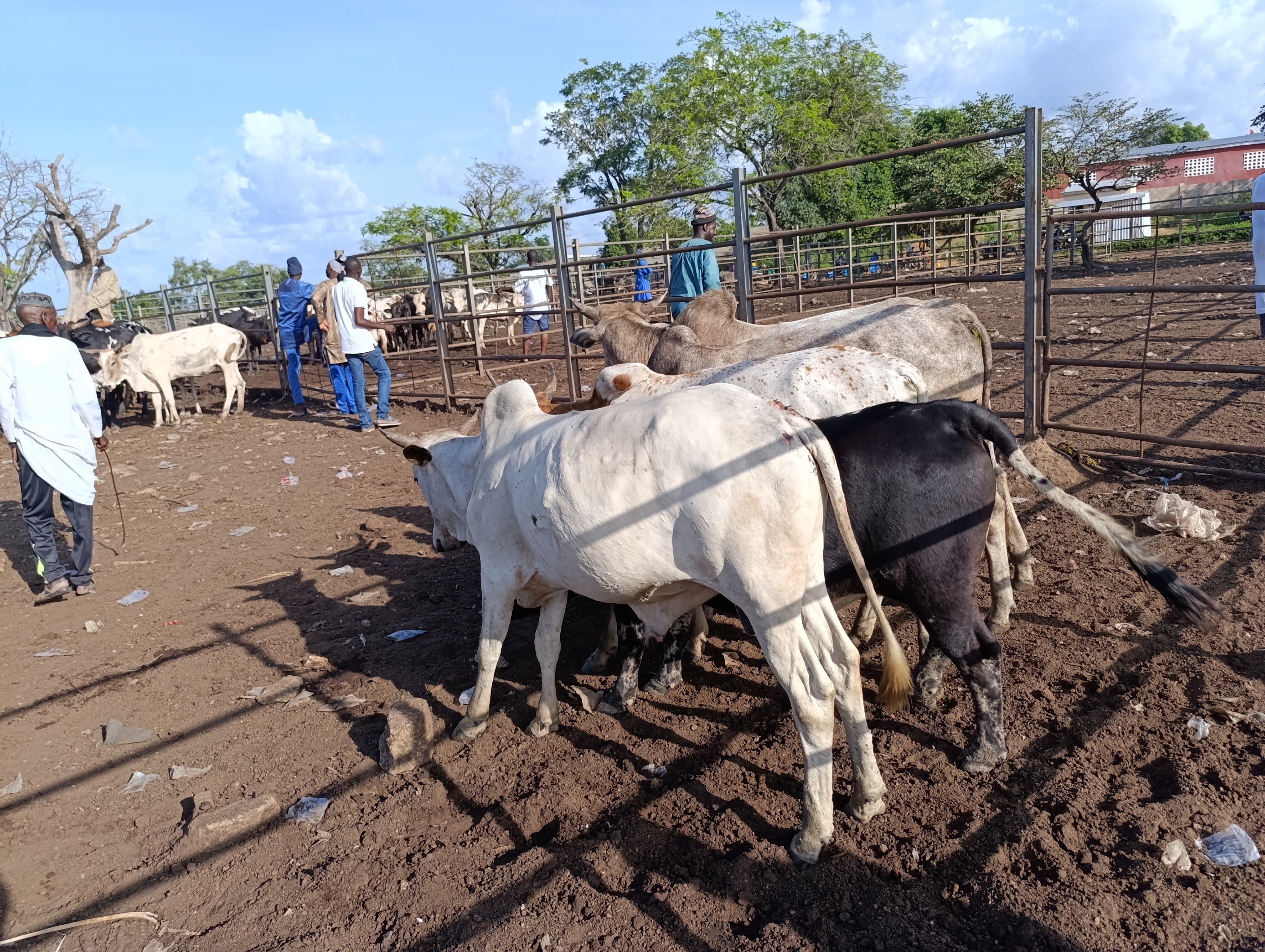
The Upper West region of northern Ghana and the Bounkani region of northern Côte d’Ivoire emerged during research as critical laundering hubs for cattle rustled in Burkina Faso. This finding corroborates analysis suggesting that JNIM can acquire resources in these areas without recourse to violence, indicating a strategy of non-violent extraction in key logistical corridors.

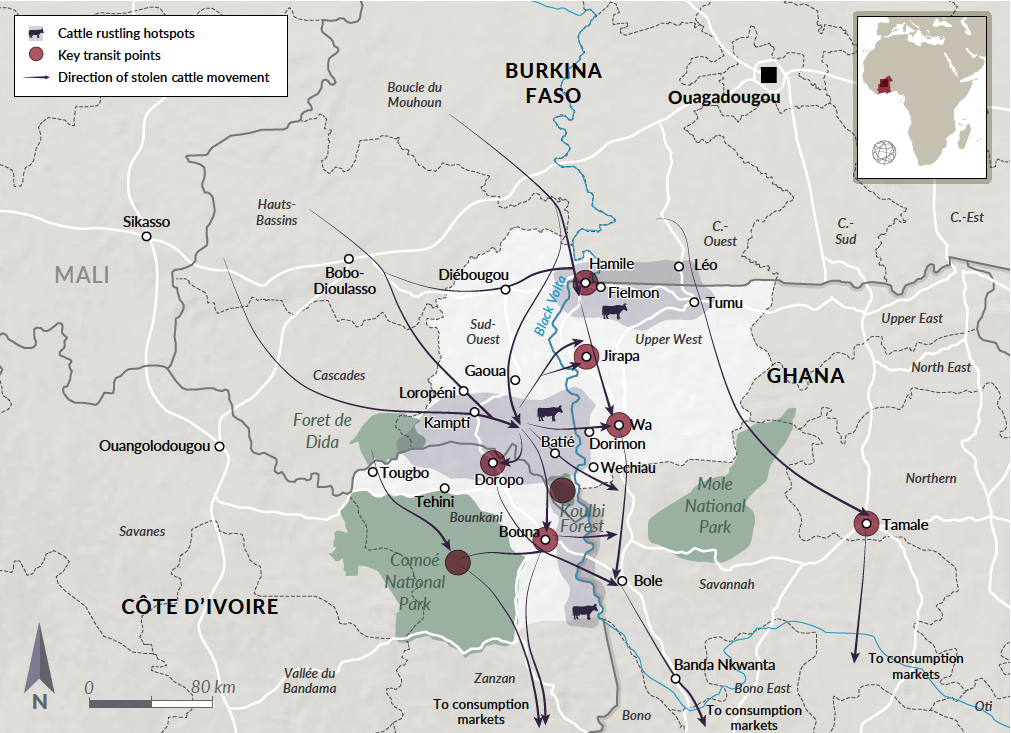
Map of cattle rustling hotspot, transit and selling point
Map of cattle rustling hotspot, transit and selling point
The involvement of armed actors in the cross-border livestock market distorts trade dynamics. Intermediaries and traders purchase stolen cattle at cut-price rates, enabling them to double or triple their profits. This alignment of interests between powerful economic actors in coastal states and conflict-related actors, such as JNIM, entrenches the status quo and undermines peacebuilding efforts.
While JNIM remains the key actor in cattle rustling in southern Burkina Faso, the VDP have also been central to this activity since 2024. This development has blurred the lines between counterterrorism actors and criminal networks, thereby undermining state legitimacy.


AfL/EAI
AfL/EAI
AfL/EAI
AfL/EAI
AfL/EAI
AfL/EAI
AfL/EAI
AfL/EAI
AfL/EAI
AfL/EAI
AfL/EAI
AfL/EAI
AfL/EAI
AfL/EAI
AfL/EAI
AfL/EAI


GOLD MINING
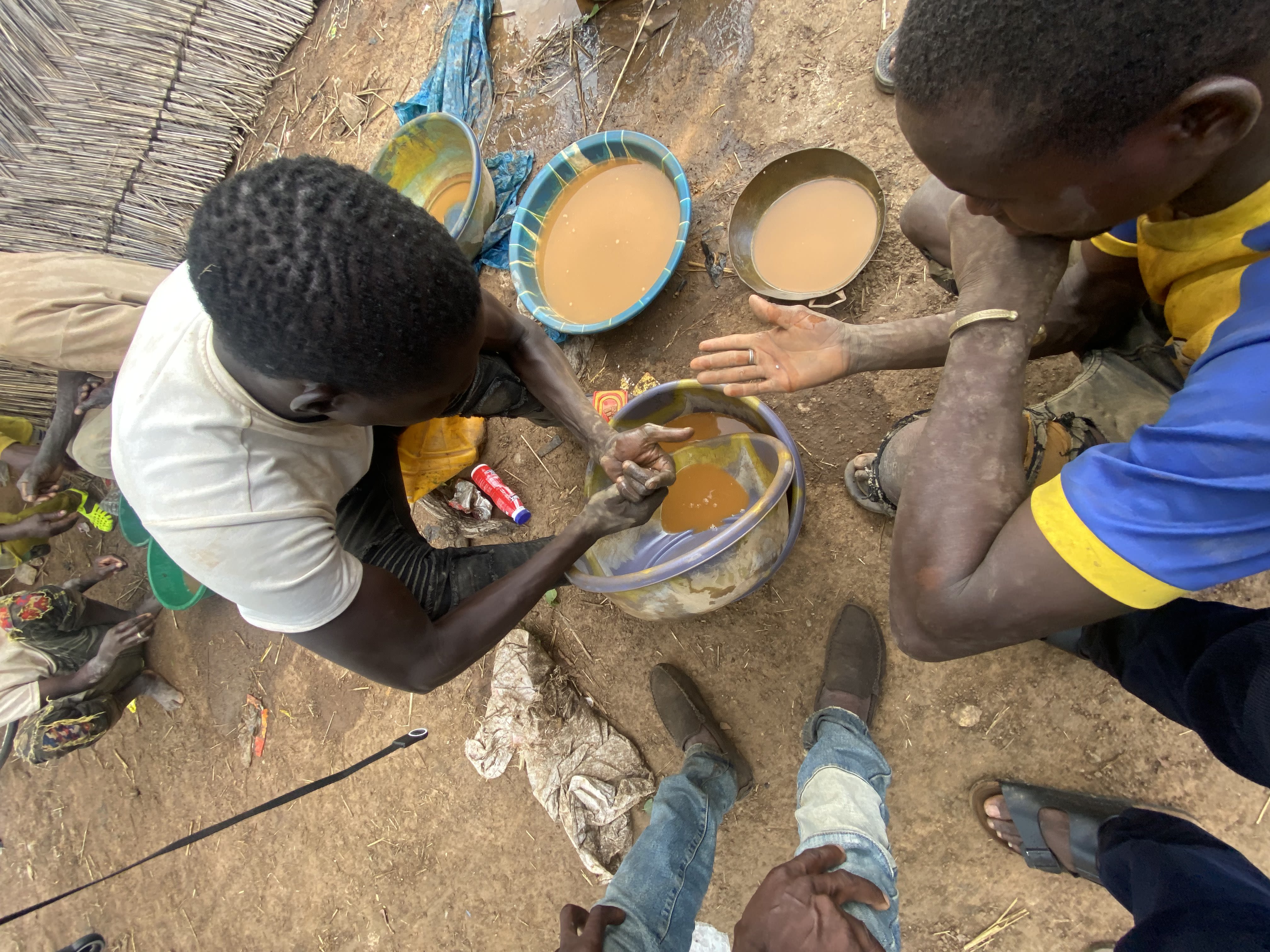
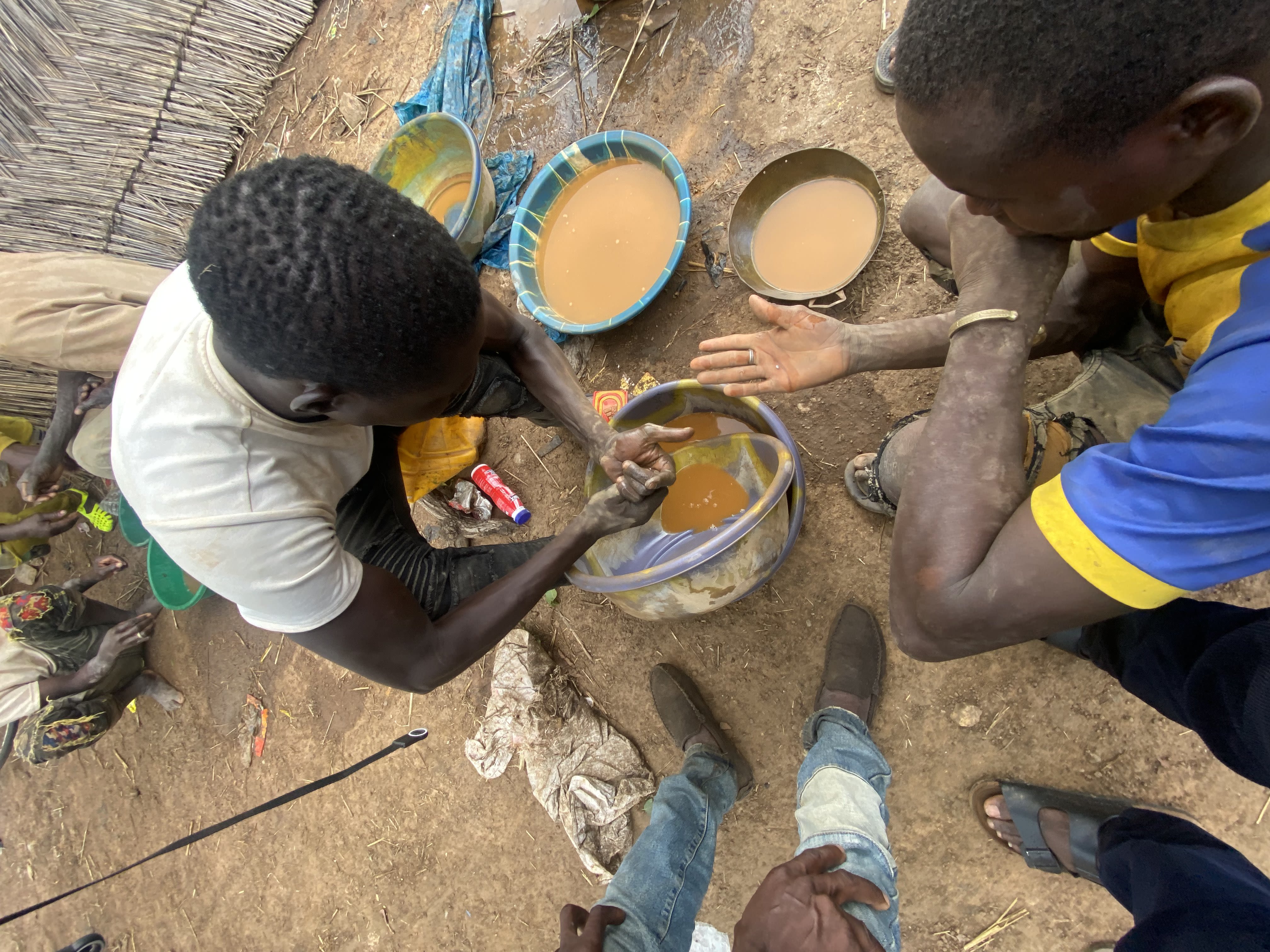
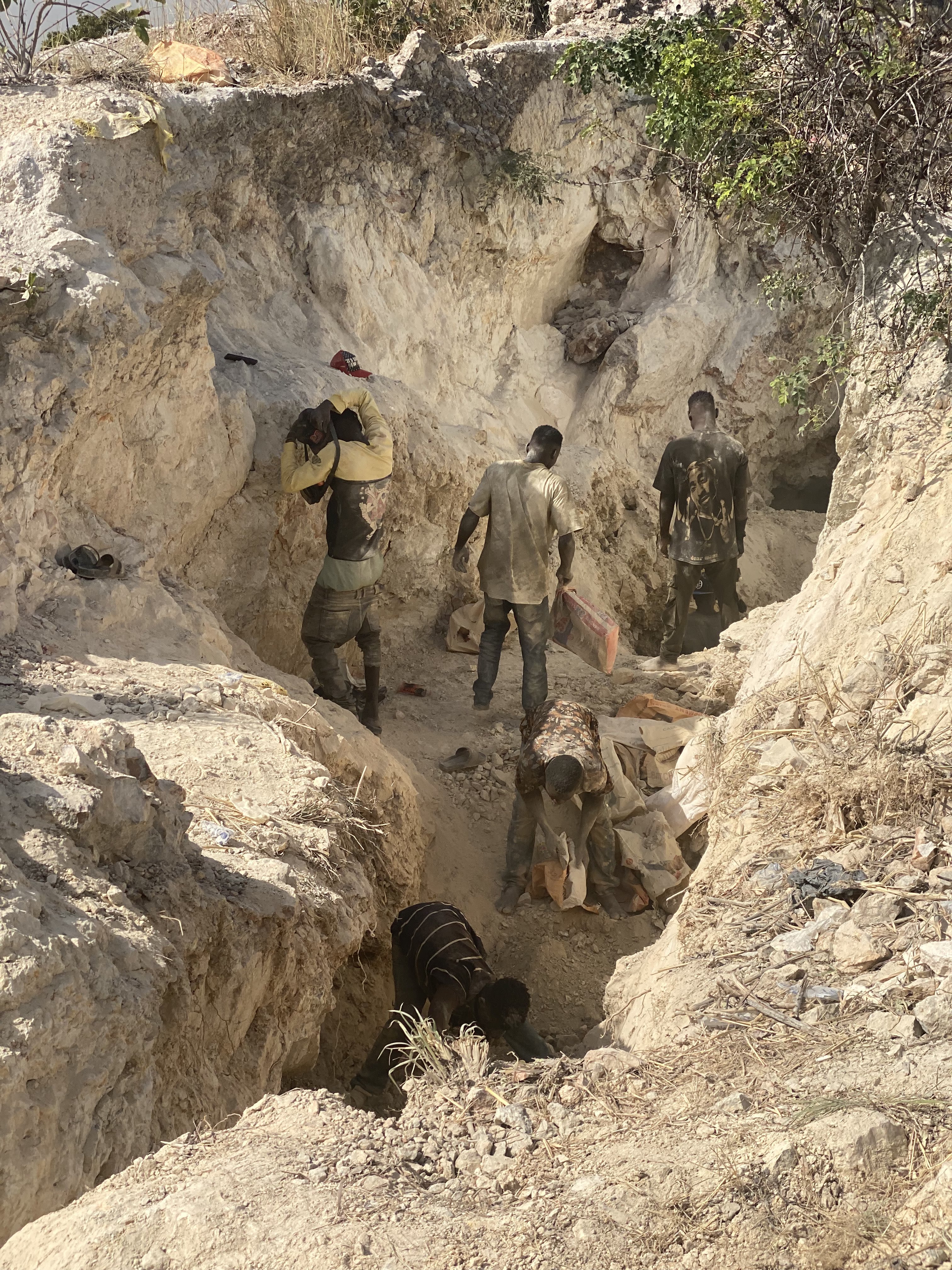
Burkinabé actors are known to finance gold processing and buying operations in northern Ghana. However, no evidence was found to directly connect those involved in the gold sector with violent extremist organizations such as JNIM. Investigations also revealed that while JNIM may benefit financially from gold mining in Burkina Faso’s border regions, the civilian paramilitary force Volunteers for the Defence of the Homeland (les Volontaires pour la Défense de la Patrie, VDP), plays a more active and visible role. This reaffirms previous GI-TOC research and highlights the need for continued monitoring and nuanced analysis.
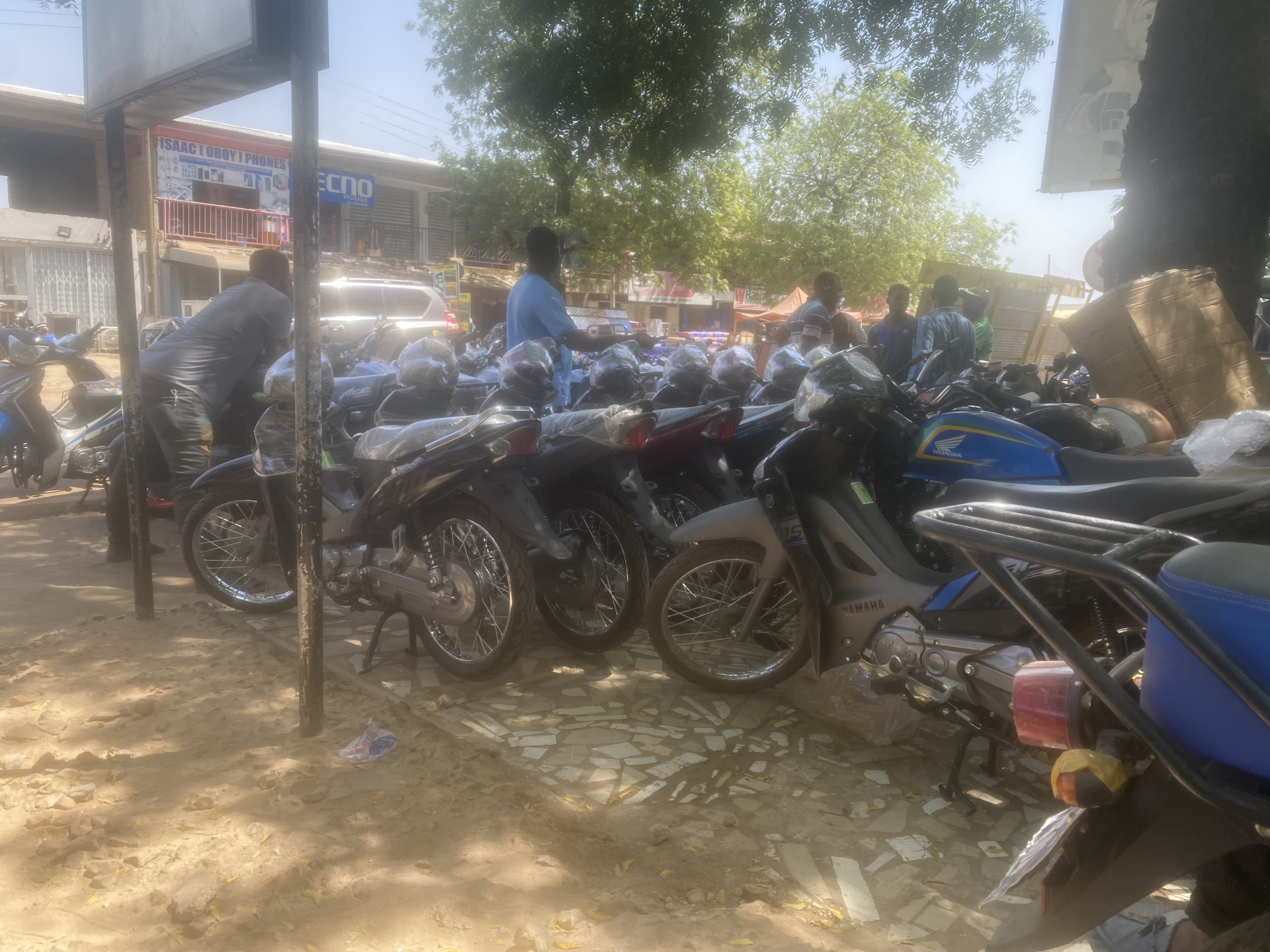
While there are no clear links with extremism, the gold sector poses security risks in other ways. There is evidence of significant illicit gold flows from Ghana to Burkina Faso, and this activity is interwoven with illicit finance. The smuggling of items such as explosives, fertiliser, fuel and motorbikes is also widespread. These resources are essential not only for gold mining, but also for JNIM’s operations. This crossover contributes to regional insecurity and undermines local governance.
Lastly, there is a potential risk of recruitment to violent extremist organizations among populations in northern Ghana. With evidence of emerging recruitment in northern Ghana, continued monitoring and proactive engagement and sustained support for border communities are crucial to mitigate the risk of this trend escalating.

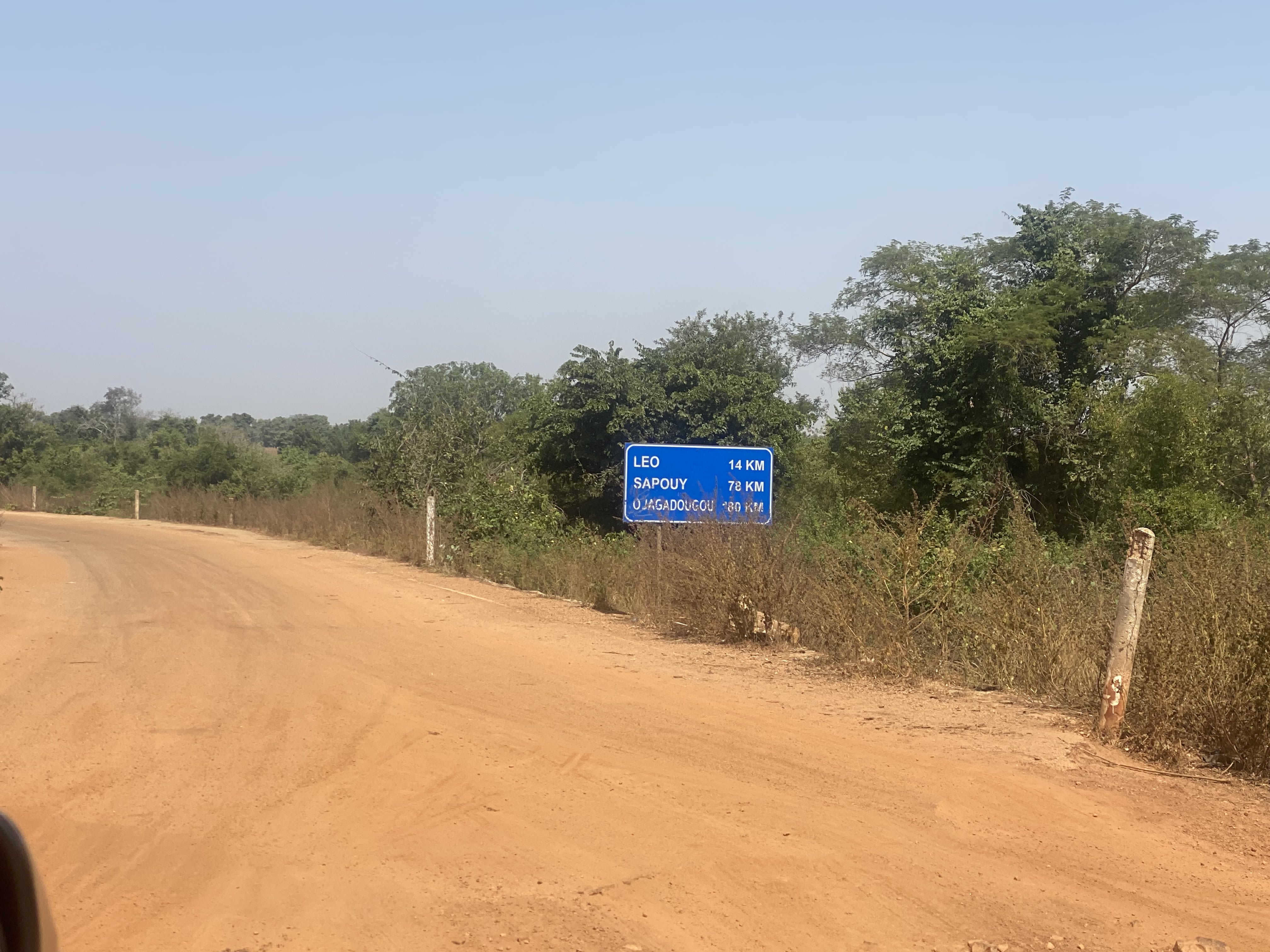

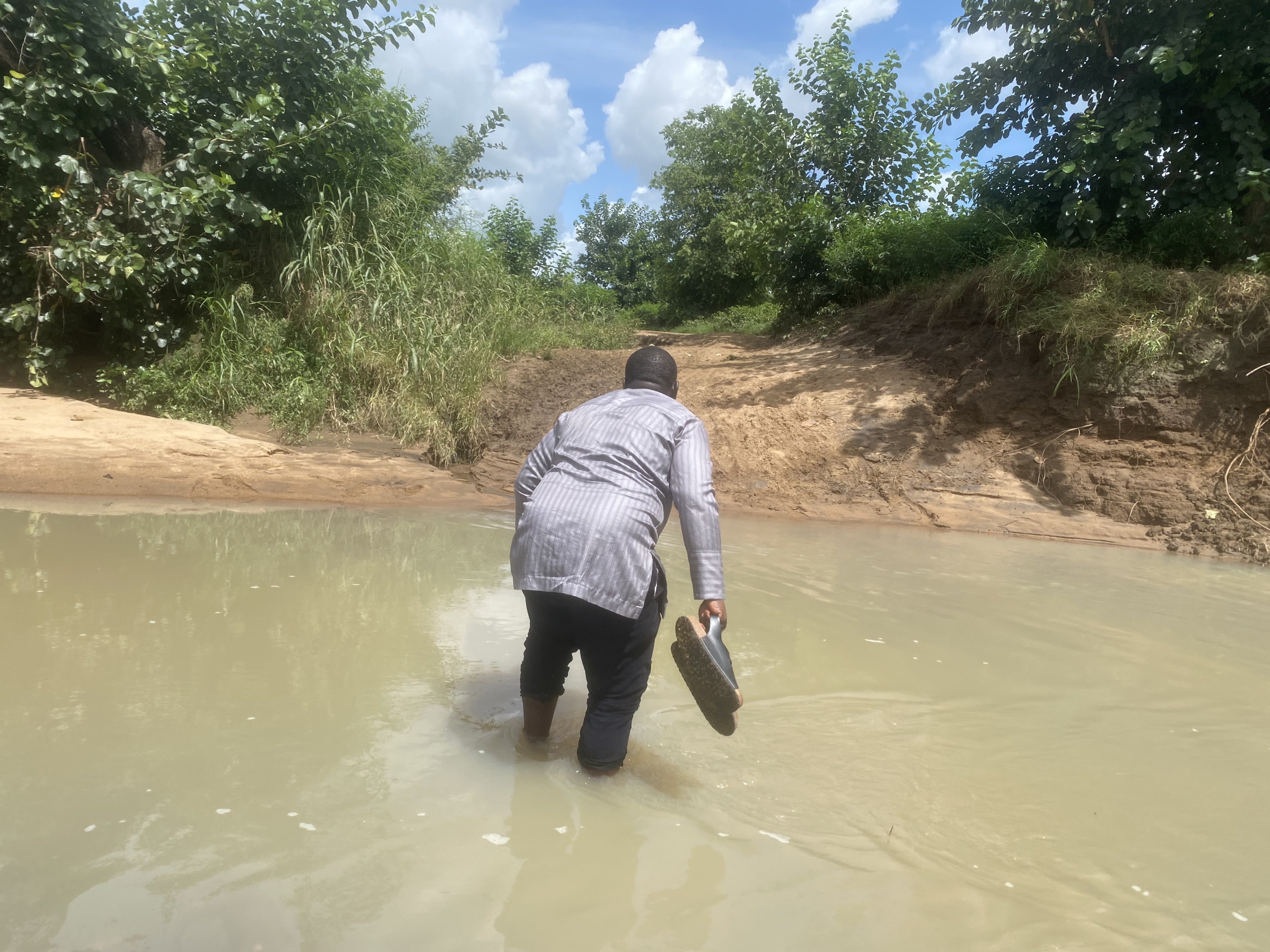
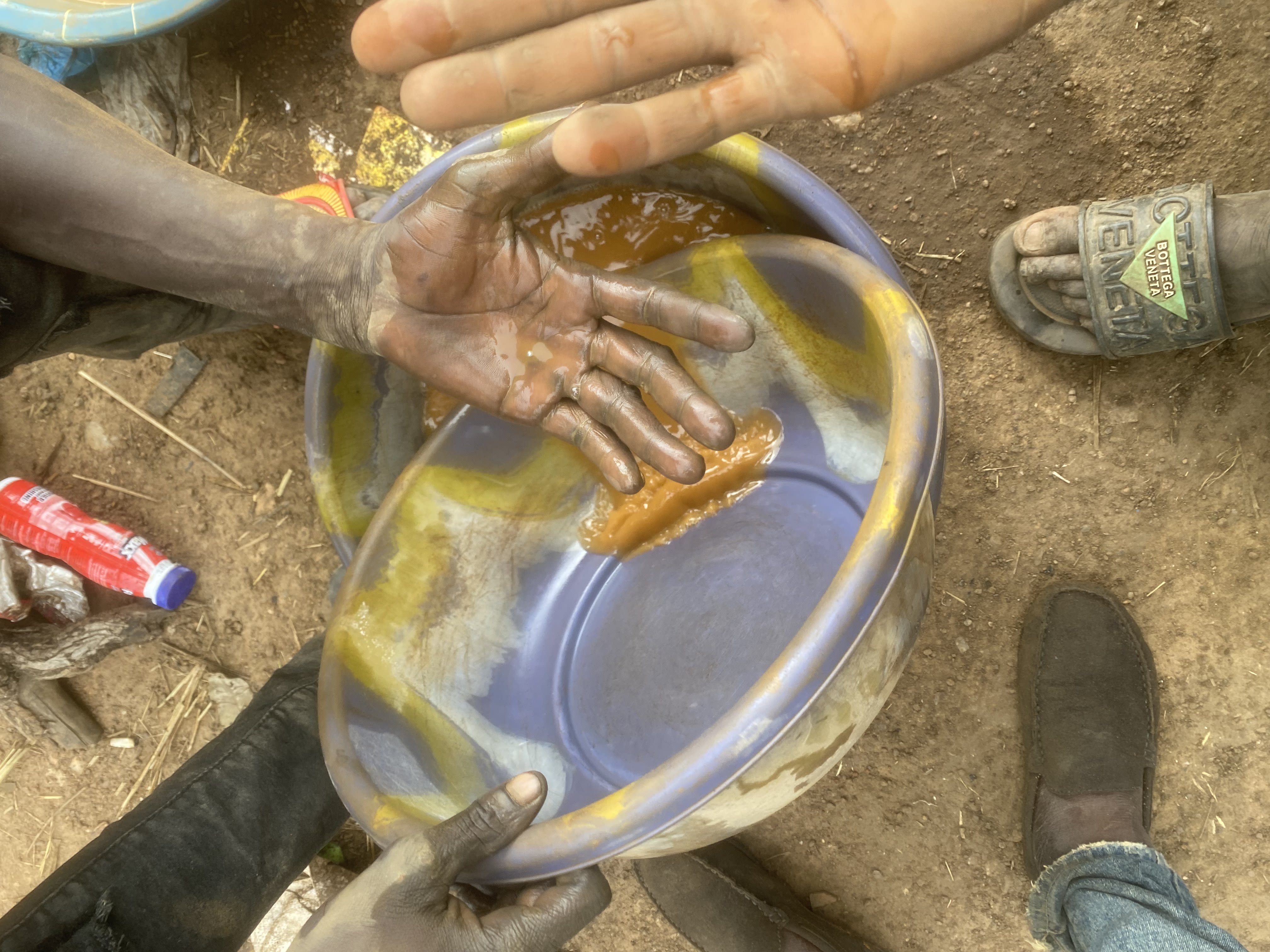



The ’Support to the Mitigation of Destabilizing Effects of Transnational Organised Crime (M-TOC)’ project is commissioned by the German Federal Foreign Office, implemented by Deutsche Gesellschaft für Internationale Zusammenarbeit (GIZ) GmbH and the Global Initiative Against Transnational Organized Crime (GI-TOC), from 2024 to 2025.
The project aims to develop targeted measures to strengthen stability in border regions. Taking a unique, integrated approach, M-TOC combines traditional security responses with bottom-up community resilience measures, drawing on a body of research developed at the intersection of illicit economies and instability.
As part of M-TOC, the GI-TOC has been mapping the convergence of illicit economies and instability across West Africa, with a focus on criminal markets that fuel violence. The region’s armed conflicts are among the deadliest in the world, devastating communities and emphasizing the need for a more robust response to transnational organized crime.



About the Global Initiative
The Global Initiative Against Transnational Organized Crime is a network of professionals working on the frontlines of the fight against the illicit economy and criminal actors. Through a network of global civil society observatories on the illicit economy, we monitor evolving trends and work to build the evidence basis for policy action, disseminate the expertise of our Network and catalyze multisectoral and holistic responses across a range of crime types. With the Global Initiative’s Resilience Fund, we support community activists and local NGOs working in areas where crime governance is critically undermining people’s safety, security and life chances.
About the West Africa Observatory
The Observatory, established in 2021, encompasses researchers working across wider West Africa and the Sahel. The Observatory works to shed light on the political economy of transnational organized crime in the region, focusing on the links between illicit markets, instability and conflict. The Observatory applies a partnership approach, working with and supporting civil society across the region. As part of this, the Observatory maps the hubs, routes and flows of illicit markets, and the key actors, assessing their implications for regional stability, conflict, governance and social tension in the region. The countries falling within the scope of the observatory are Nigeria, Central African Republic, Mali, Niger, Côte d’Ivoire, Guinea, Cameroon, Liberia, Burkina Faso, Ghana, Gambia, Senegal, Togo, Benin, Cabo Verde, Sierra Leone, Guinea-Bissau and Chad.
 Built with Shorthand