
Mapping the future of drug markets in West Africa
Synthetics, cocaine, criminal money, and strategic responses
PRESS KIT


New research into West Africa drug markets: at least 30% of Europe’s cocaine is believed to be routed through the region; synthetic drug markets have diversified and expanded, driving growing harms
Key points:
- West Africa’s cocaine market has surged since 2019, and the region is a growing warehousing, redistribution and containerization point in international cocaine trafficking routes.
- The unprecedented scale and profitability of the cocaine market makes it a powerful corrupting force, undermining governance. In turn, corruption - rather than violence - is a key enabler of cocaine trafficking in West Africa.
- Since 2019, existing evidence indicates that European criminal networks have expanded operations in West Africa.
- West Africa’s synthetic drug markets are expanding, diversifying and driving escalating harms. Powerful synthetic opioids are having particularly devastating impacts.
- Digital technology and globalized supply chains tie West Africa’s synthetic drug markets to global trends, underpin the emergence of new psychoactive substances and drive market expansion.
- Data gaps present a key obstacle to evidence-based and effective public health and criminal justice responses.
A rapidly evolving drug landscape
Synthetic drug markets are rapidly evolving and expanding. Initially dominated by tramadol, West Africa’s synthetic drug landscape is now far more complex, including methamphetamine, ecstasy, synthetic cannabinoids, nitazenes and other novel compounds of unknown composition.

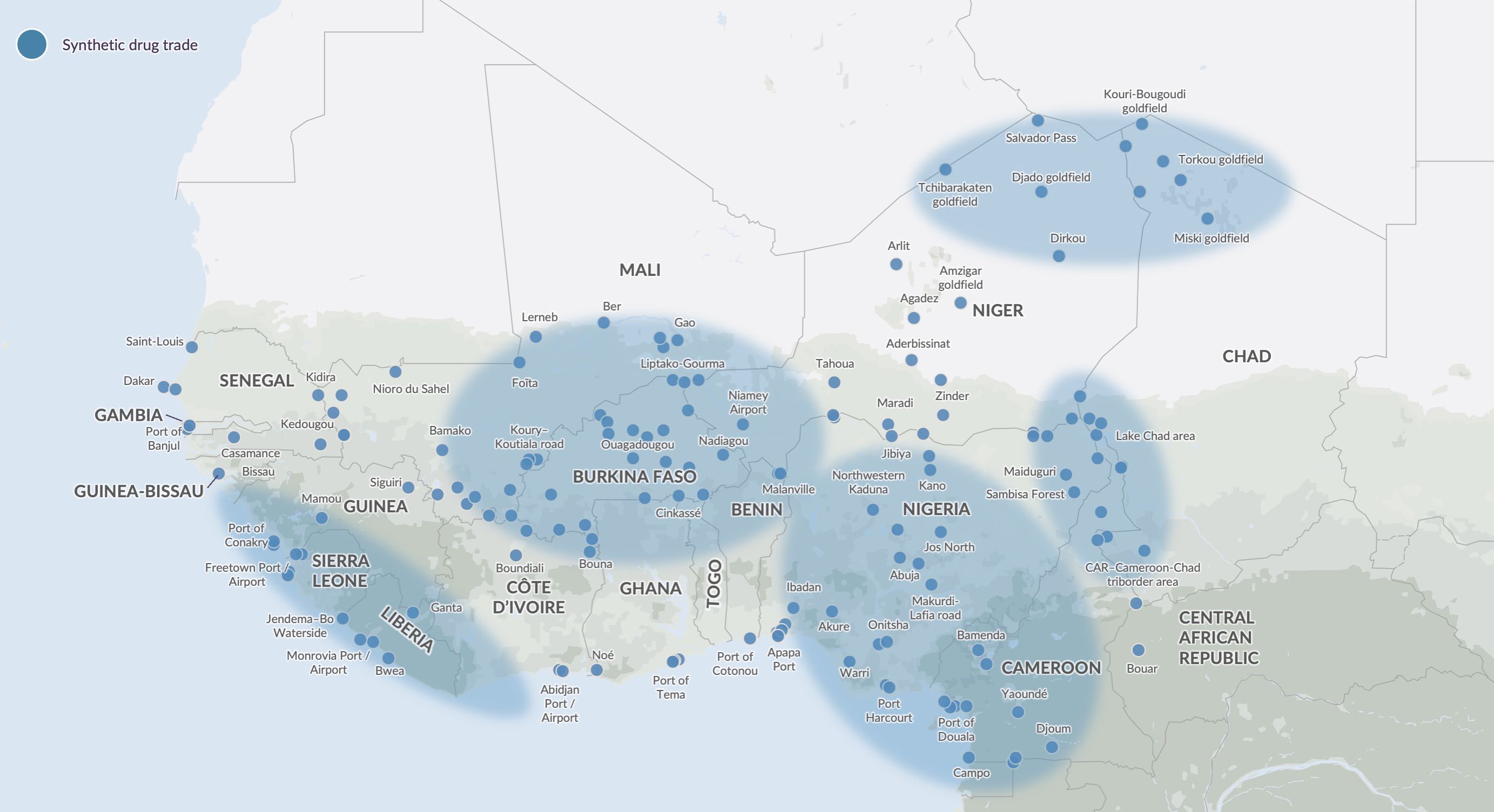
Synthetic drug trade hubs across West Africa. (GITOC West Africa Hotspot Mapping Initiative 2025)
Synthetic drug trade hubs across West Africa. (GITOC West Africa Hotspot Mapping Initiative 2025)
In parallel, the region is facing a surge in the cocaine trade, reflecting a global expansion in the market as production in Latin America has reached unprecedented levels over the last five years and consumption in Europe has surged.
At least 30% of cocaine being trafficked to Western Europe is being routed through West Africa, and several of the world’s most powerful organized crime groups now operate in West Africa’s cocaine market.
Global megatrends and organized crime
Technological and trade advances are shrinking distances, binding West Africa ever closer to global markets, be they licit or illicit. This increased connectivity has underpinned the sharp expansion in the synthetic drugs and cocaine markets witnessed over recent years.
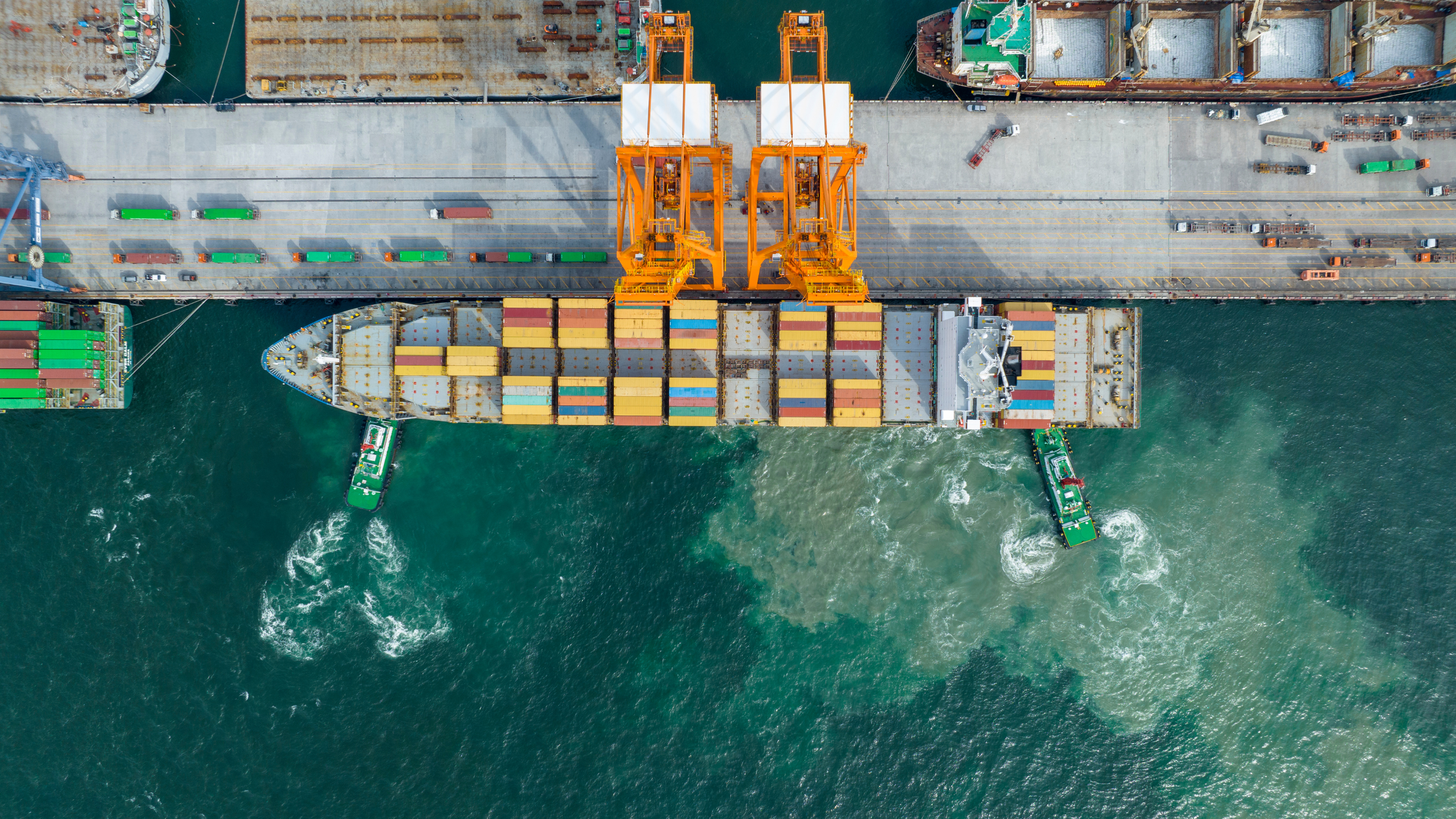
Investments in trade facilitation and transport infrastructure in West Africa – in the maritime ports, airports and roads that underpin trafficking – have provided ever more efficient architecture for high-volume international trafficking.

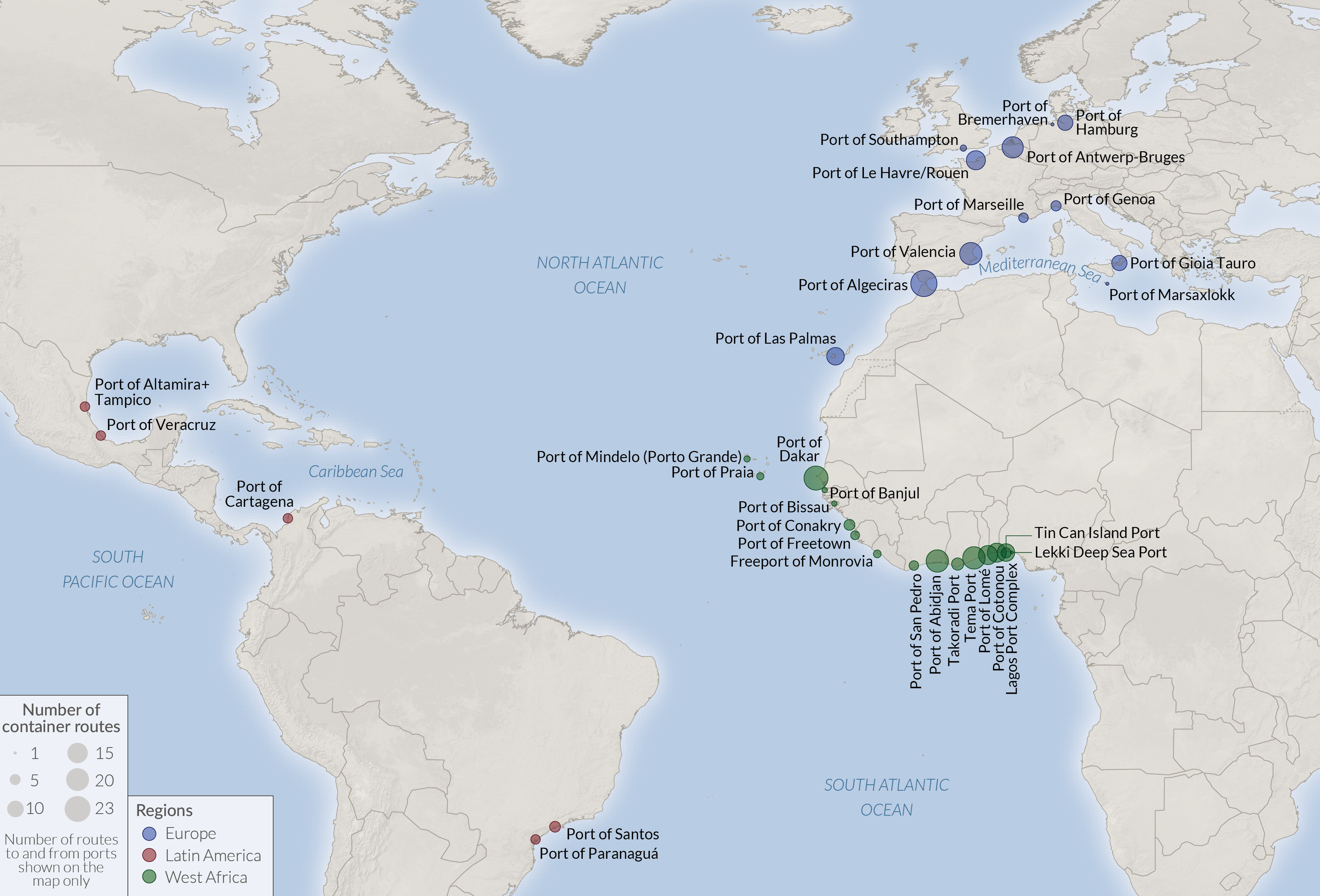
Connections between ports in West Africa, Latin America and Europe.
Connections between ports in West Africa, Latin America and Europe.
Growing internet penetration and technological developments have enabled online purchase of synthetic drugs, transforming the criminal ecosystem and facilitating safe communications between actors in West Africa and those based elsewhere.
As highlighted by the hacks into the Encrochat and SkyECC platforms, there is a greater presence of high-level European and Western Balkan actors than had previously been suspected.
Synthetic drugs: a complex and escalating threat
The illicit drug landscape in West Africa – and globally – has been fundamentally reshaped by a surge in the manufacture, trafficking and consumption of man-made psychoactive compounds. There has been a fast-paced diversification and proliferation of substances. Tramadol has splintered into numerous more harmful derivatives, such as tapentadol-based products, and has been overtaken by other synthetic drugs in many countries. At the same time, there has been an influx of new synthetic substances previously unseen in West Africa’s retail markets, including synthetic cannabinoids, nitazenes and other novel compounds of unknown composition.
Low production costs are creating potent compounds that are affordable to many and offer high profit margins attractive to criminal actors. Because of this, traffickers – within West Africa and internationally – are targeting West African consumers more than ever before. This is happening amid widespread economic stress and high youth unemployment in many countries.

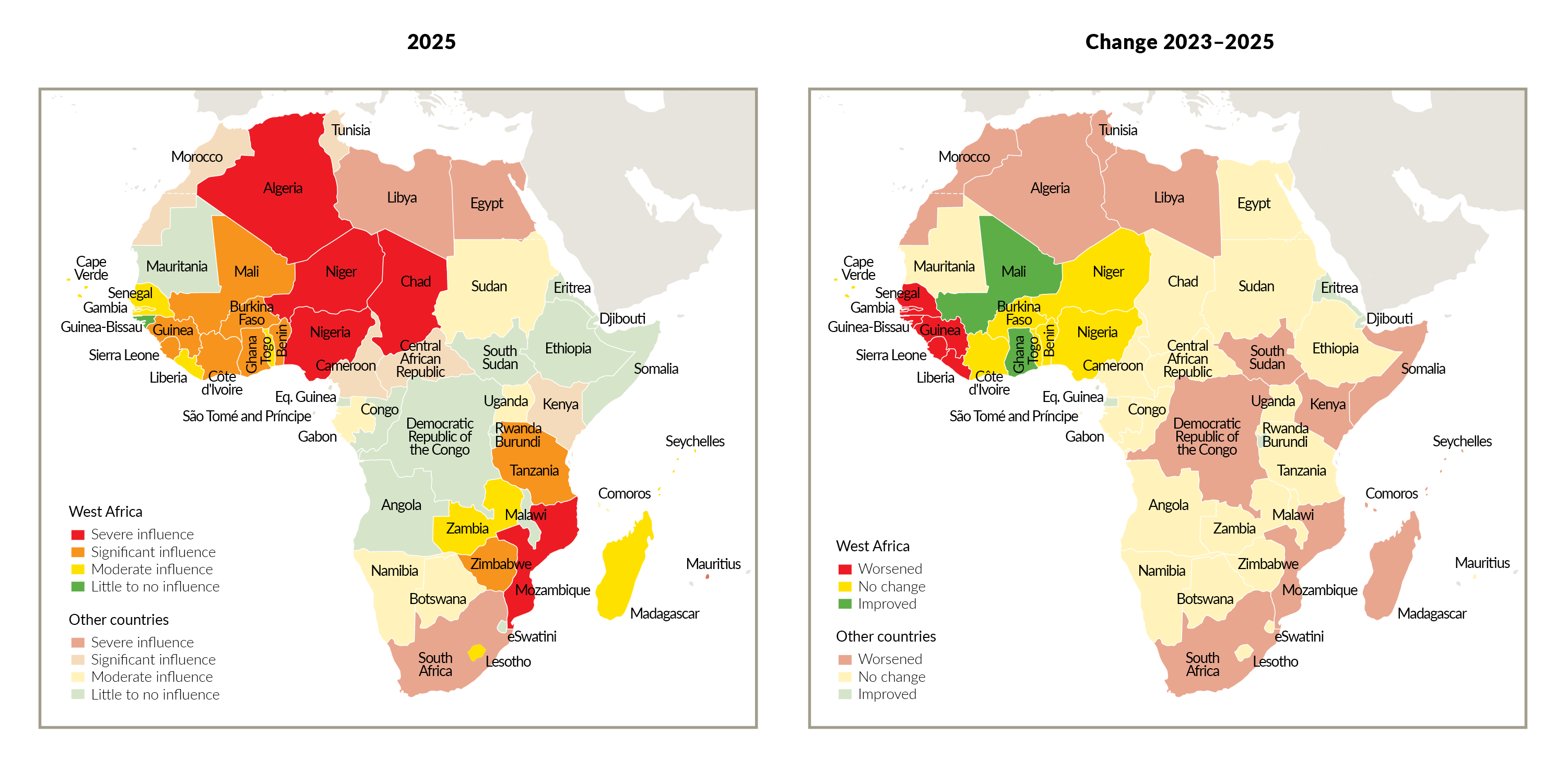
Change in the pervasiveness of the criminal market for synthetic drugs, 2023–2025 (Global Organized Crime Index, GI-TOC, 2025 - ocindex.net)
Change in the pervasiveness of the criminal market for synthetic drugs, 2023–2025 (Global Organized Crime Index, GI-TOC, 2025 - ocindex.net)
Particularly alarming is the growing proliferation of synthetic opioids such as nitazenes – powerful, cheap and often deadly. Their potency and availability pose unprecedented challenges to public health systems and law enforcement agencies alike.

New criminal actors and a fragmented market
Synthetic drugs do not need significant start-up capital or international connections. Actors can purchase precursors – or retail-ready drugs – online. And the profits are extremely high. This has lowered barriers to entry and enabled a wave of new criminal actors to enter the trade, transforming the criminal market into a far more fragmented and dispersed one.
These developments are multiplying harms. Since 2024, the impacts have become so severe in several West African countries that two – Liberia and Sierra Leone – have declared states of emergency, an unprecedented response previously reserved for deadly epidemics and pandemics. Overdoses, chronic health conditions, severe mental health conditions and community fragmentation are escalating. These consequences are concentrated among youth, posing a severe risk to future development in some countries.
Global supply chains
For years, the drug known as kush was framed as a challenge experienced by Sierra Leone and neighbouring states alone. However, chemical testing and thorough mapping of supply chains revealed a very different picture. Kush is known to be composed of two psychoactive ingredients: synthetic cannabinoids and nitazenes. These potent synthetic compounds, manufactured outside West Africa and imported through international shipping and trade routes, pose significant challenges in many regions worldwide.
West Africa’s synthetic drug markets are shaped by imports from two main regions: Asia, particularly China and India, and Europe. While some networks in West Africa have connections to individuals in Asia and Europe who handle exports, others merely purchase what they need online. Business-to-business and classified adverts websites in West Africa are being flooded with adverts for powerful synthetic drugs and their precursors, largely from suppliers that appear to be based in Hong Kong and mainland China.

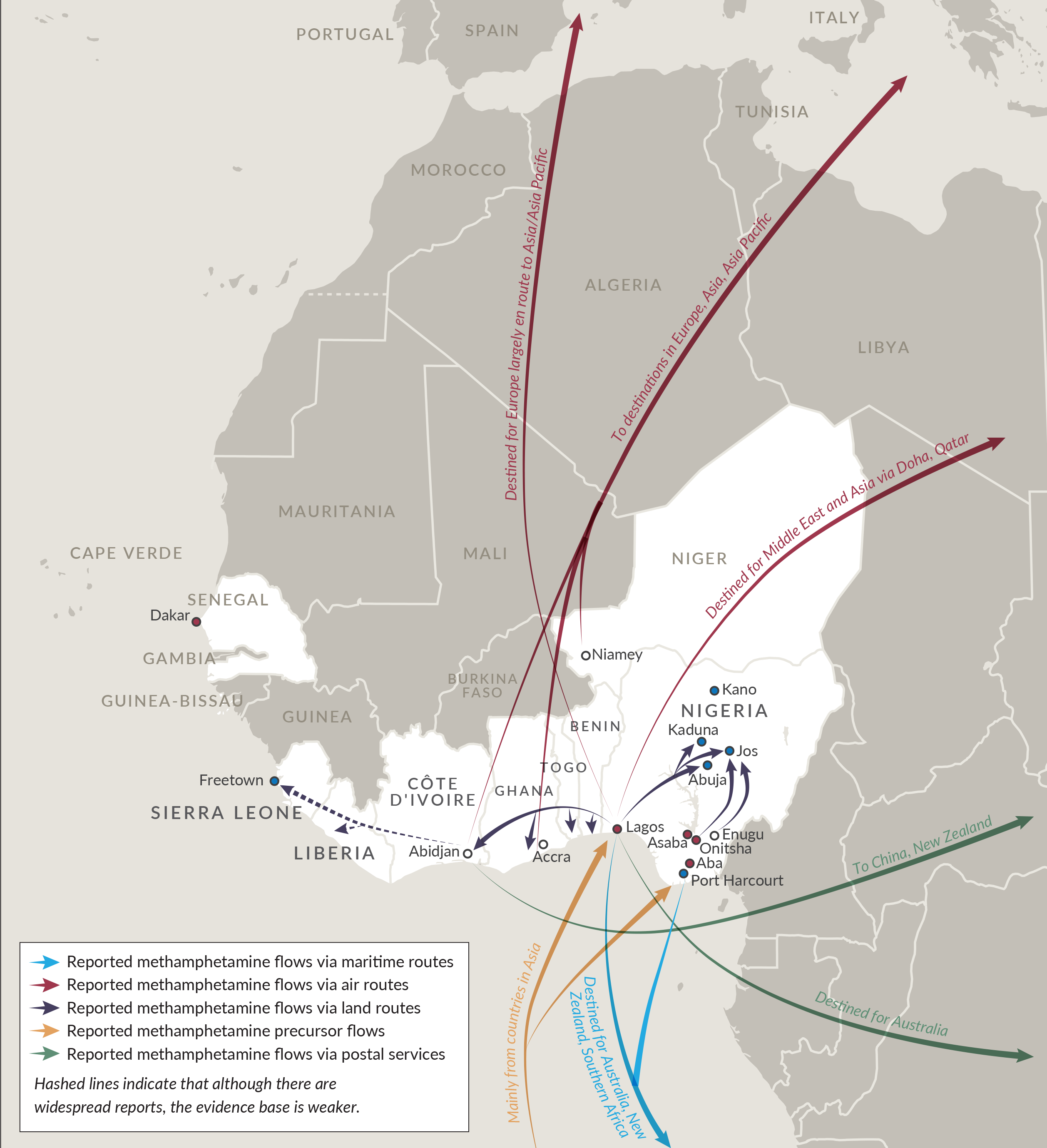
Reported methamphetamine flows in West Africa (Mapping synthetic drug markets in West Africa, GI-TOC, November 2025)
Reported methamphetamine flows in West Africa (Mapping synthetic drug markets in West Africa, GI-TOC, November 2025)
Once purchased, imports use containerized shipping routes and postal courier services, which carry growing volumes of licit goods and are very difficult to monitor. As only a very small amount can create enormous volumes, postal courier services are emerging as the favoured trafficking modality for many synthetic drugs. Very few countries have screening systems capable of monitoring postal courier imports that pose these risks.
The diversity of substances being synthesized, the inability of surveillance systems to effectively identify them, and the challenge of interdicting and mitigating their harms significantly impairs health and security services.
Cocaine: profits, power and governance risks
West Africa is facing a surge in the cocaine trade, reflecting a global expansion in the cocaine market. As volumes have increased, so have profits. Although many of the illicit financial flows generated by West Africa’s cocaine trade leave the region, a substantial proportion stays: some is paid to regional intermediaries and invested in real estate across the region, supporting construction booms in key urban hubs; and some is paid to individuals in West Africa to purchase protection.
Corruption from the cocaine trade has reached new heights in many regions of the world. In Europe, there have been unprecedented convictions of senior public officials due to ties to the cocaine trade. West Africa is no exception – investigations have repeatedly identified corruption at several levels. The impact on governance is immense.

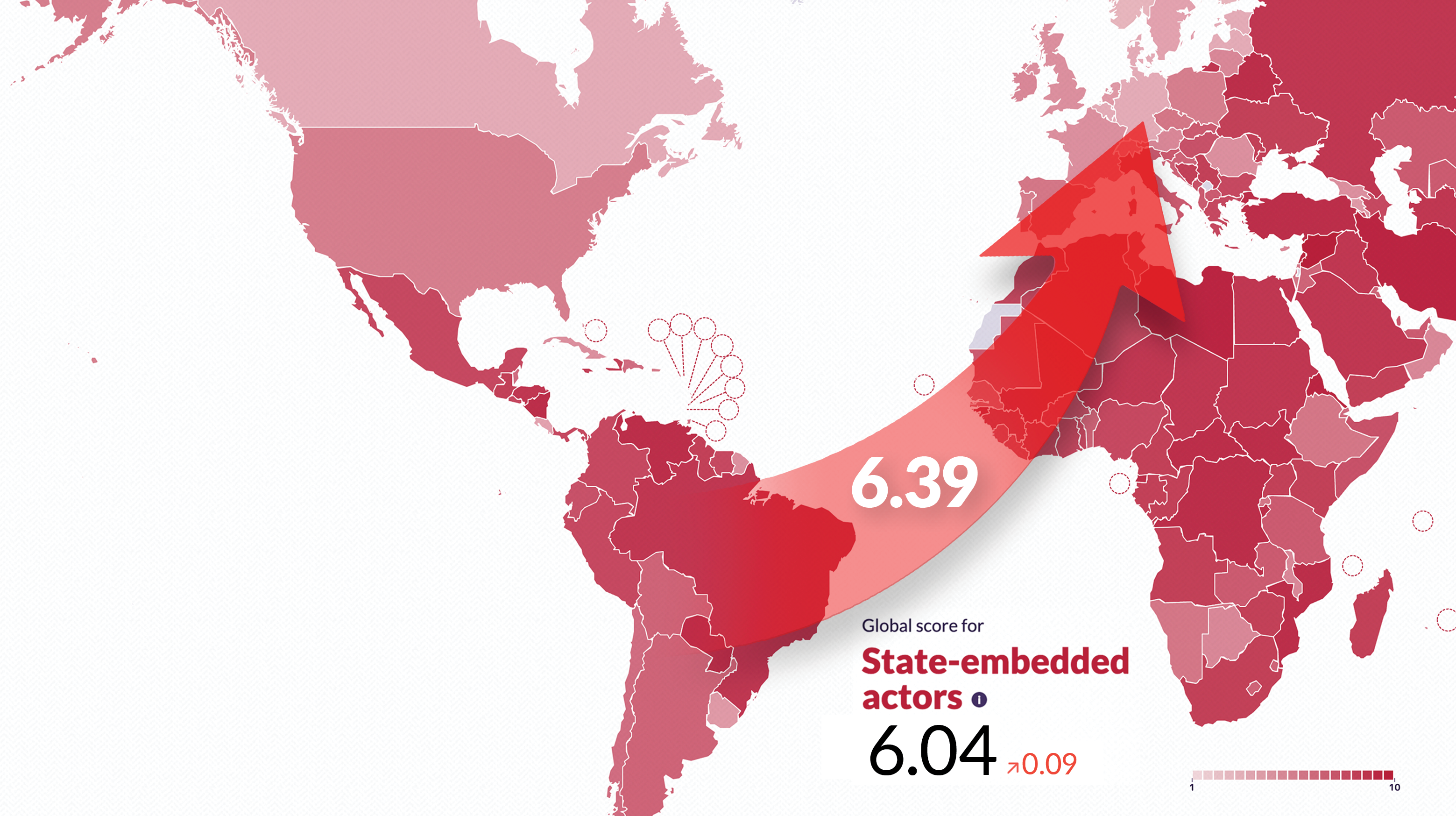
Global score for State-embedded actors. (Global Organized Crime Index, GI-TOC, 2025 - ocindex.net)
Global score for State-embedded actors. (Global Organized Crime Index, GI-TOC, 2025 - ocindex.net)
Also key are regional intermediaries – in charge of logistics, with connections on the ground. These often operate at scale and many are extremely resilient, with major players active for over a decade.
Finally, completing the triangle of actors underpinning the region’s cocaine trade are foreign criminal actors. Some of the world’s most sophisticated criminal networks are engaged in cocaine trafficking and are thought to be operating in West Africa. This underscores the importance of intelligence-sharing and cooperation between West Africa and Europe.

Intelligence gaps and ‘safe’ routes
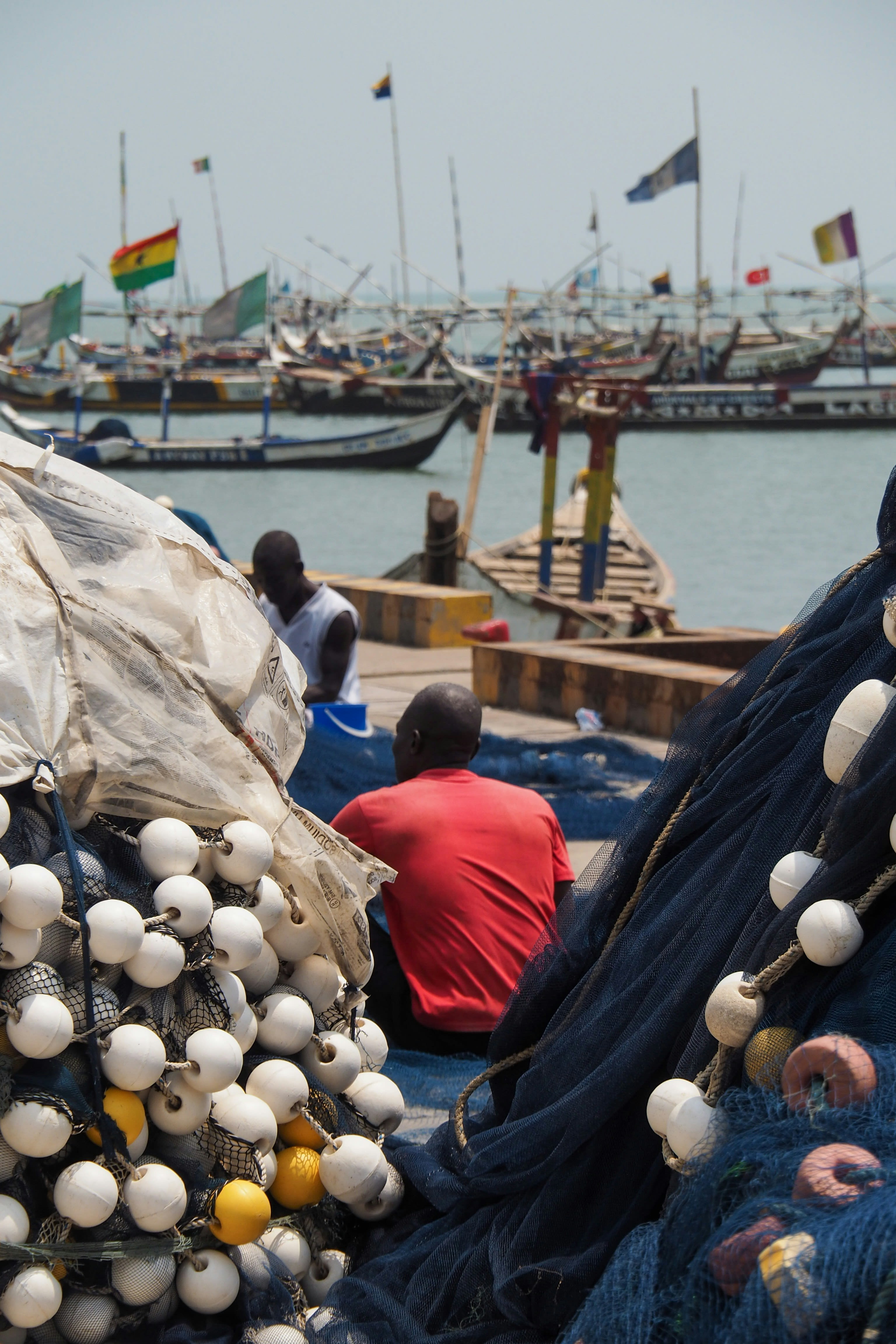
Traffickers are exploiting intelligence gaps. Multi-tonne consignments of cocaine are brought in on fishing vessels and motorboats, and are trans-shipped at sea before being brought on land. After this point, the picture becomes more limited. Some flows leave by air or again on fishing vessels; some take land routes. But this does not add up to the quantities being brought into the region.
Containerization in West Africa may be part of the answer. There are extremely few seizures in West African maritime ports on export, partly because screening capabilities are focused on imports, as is the case with ports around the world.
In countries of import, without intelligence leads, seizures in containers are rare. Intelligence gaps regarding cocaine flows leaving West Africa are therefore making it a safer route for traffickers, with a lower risk of disruption.
In today’s fast-changing criminal landscape, data gaps are a significant challenge undermining the response. What we think we know about drugs in the region is greater than what we really know.
Closing data gaps and strengthening early warning systems
Addressing these gaps can only be achieved through multi-stakeholder efforts, drawing on data from diverse sources, and combining official and unofficial data sets. Regional and international collaboration – on data sharing, public health, disrupting global supply chains and for early warning systems – is critical to respond to this challenge.

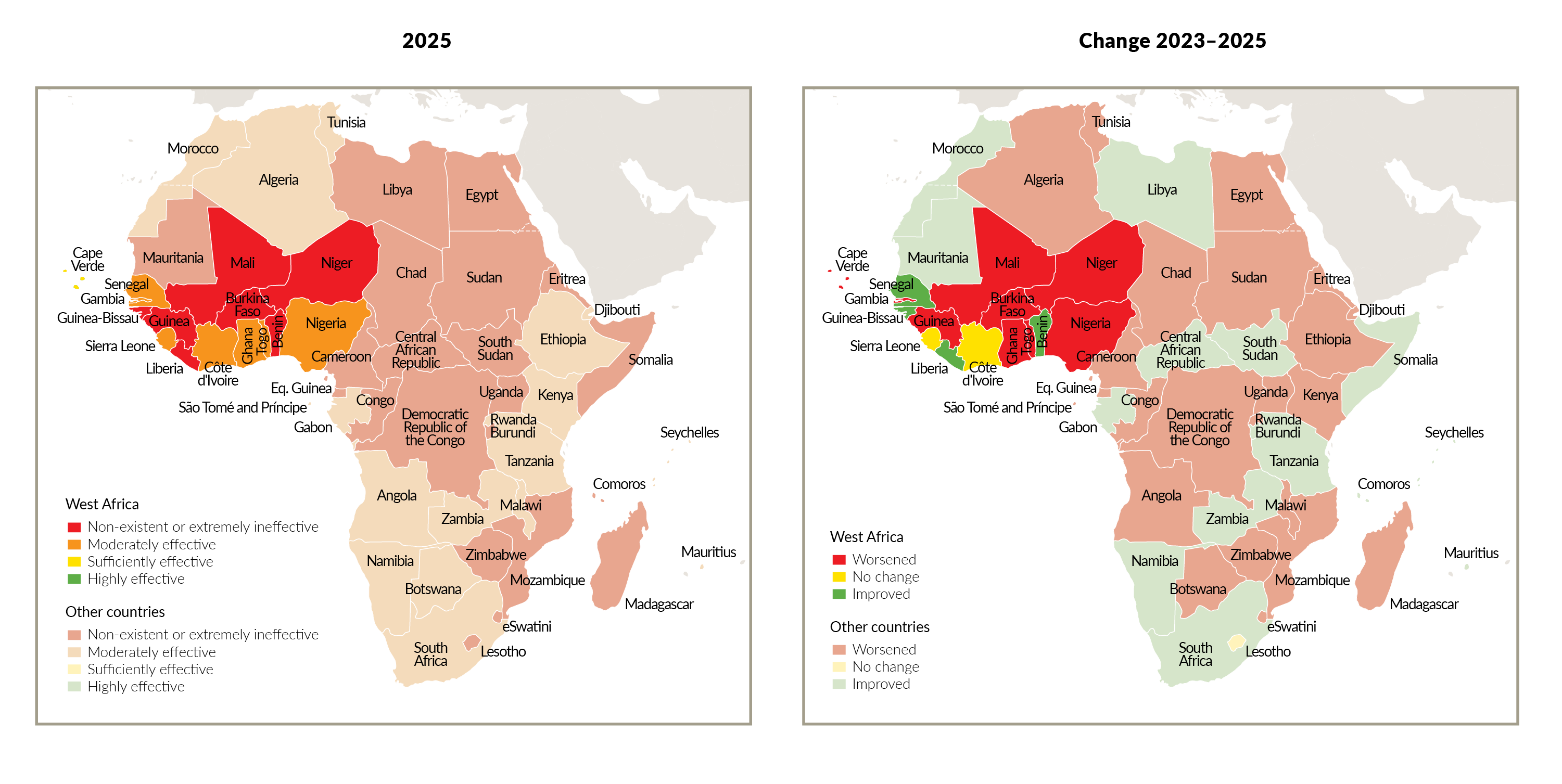
Mapping resilience, 2023–2025. (Global Organized Crime Index, GI-TOC, 2025 - ocindex.net)
Mapping resilience, 2023–2025. (Global Organized Crime Index, GI-TOC, 2025 - ocindex.net)
Sharpening the intelligence picture requires enhancing data sharing within West Africa and between West Africa and Europe. With such data, strategic targeting of brokers in cocaine markets and key nodes in synthetic drug markets – such as parts manufacturers – is possible, making the law enforcement response more impactful. Improved data capacity can transform not only the criminal justice response but also early warning and forecasting systems, and public health responses. This requires engagement between forensic laboratories, health professionals and civil society.
Building such alliances is one of the objectives of the West Africa Drugs Dialogue. With resources increasingly constrained, it is essential to invest in data to inform interventions.
Shared responsibility and multi-stakeholder coalitions
The response to cocaine and synthetic drugs is a shared responsibility – across government, civil society and the private sector. It relies on stakeholders beyond government, with civil society raising red flags on concerning developments or paving the way for policy reform, and with the private sector, particularly maritime shipping companies and postal courier services that are carrying drugs across the world. These companies have resources, expertise and global connections to contribute to the response. Although dialogue exists and companies are already stepping up their actions, more can be done.
Recognizing the transnational, global challenge posed by cocaine and synthetic drugs, it is essential to ensure the response is as globally interconnected as the supply chains. Enhancing platforms for dialogue and operational collaboration between Europe and West Africa, and between West Africa and Asia, is a key part of this. This dialogue is one milestone in a longer process towards flexible, evidence-based and more cohesive responses.


Explore related research and analysis from the Observatory of Illicit Economies in West Africa:
Illicit hub mapping in West Africa
The challenge of responding to synthetic drug markets, through the lens of tramadol in West Africa
A murder and a shooting: What do two recent incidents reveal about Guinea-Bissau's cocaine politics?
Under the radar: Western Balkans’ cocaine operations in West Africa
About the West Africa Observatory
The GI-TOC's Observatory of Illicit Economies in West Africa, established in 2021, encompasses researchers working across wider West Africa and the Sahel. The observatory works to shed light on the political economy of transnational organized crime in the region, focusing on the links between illicit markets, instability and conflict. The observatory applies a partnership approach, working with and supporting civil society across the region. As part of this, the observatory maps the hubs, routes and flows of illicit markets, and the key actors, assessing their implications for regional stability, conflict, governance and social tension in the region. The countries falling within the scope of the observatory are Benin, Burkina Faso, Cabo Verde, Cameroon, Central African Republic, Chad, Côte d’Ivoire, Gambia, Ghana, Guinea, Guinea-Bissau, Liberia, Mali, Niger, Nigeria, Senegal, Sierra Leone and Togo. Read more.
About the GI-TOC
The Global Initiative Against Transnational Organized Crime is a network of professionals working on the front lines of the fight against the illicit economy and criminal actors. Through a network of global civil society observatories on the illicit economy, we monitor evolving trends and work to build the evidence basis for policy action, disseminate the expertise of our Network, and catalyze multisectoral and holistic responses across a range of crime types. With the Global Initiative's Resilience Fund, we support community activists and local non-governmental organizations working in areas where crime governance critically undermines people's safety, security and life chances.
 Built with Shorthand