Tracking the invisible
Forensics, AI and the fight against wildlife crime

Wildlife crime is one of the world’s most lucrative illegal trades. Across the globe, endangered species such as rhinos, pangolins and big cats are killed to supply a market built on secrecy and impunity. The organized crime networks behind these activities operate across borders with little fear of prosecution. But every crime leaves a trace.
This exhibition brings together investigative photography and forensic science to showcase the innovative ways that wildlife crimes are being exposed and prosecuted. Through the lens of award-winning wildlife photojournalist Britta Jaschinski, the hidden infrastructure of poaching, trafficking and enforcement is revealed – from crime scene tools and border seizures to molecular laboratories and forensic examinations.
Fingerprints, ballistic fragments and biochemical residues can reveal who killed an animal, where it came from and how it was trafficked. DNA analysis can identify species and pinpoint geographic origins, even in heavily processed products. New forensic techniques enable investigators to lift fingerprints from porous materials like ivory, even weeks after handling. Today, ivory tusks, rhino horns and bottles of traditional medicine have become crime scenes, where the invisible becomes evidence.
Artificial intelligence is also used more directly in helping to protect wildlife. AI-enabled tracking collars and camera systems can detect abnormal animal behaviour, alert rangers to potential threats and monitor vulnerable wildlife populations in real time. When used together, forensic science and AI provide a powerful toolkit for exposing and preventing wildlife crime.
Expanding access to these tools – as well as providing the necessary training to use them responsibly – could transform the global response to wildlife crime, with the potential to connect cases across borders, strengthen prosecutions and disrupt criminal networks worldwide.
But technology alone is not enough. Wildlife trafficking is still all too often overlooked, and when crime scenes go undetected, evidence is lost and justice fails.
By documenting science in action, Jaschinski’s work highlights a crucial paradigm shift: wildlife crime is not just an environmental concern – it is a serious criminal offence. These images capture the moment when accountability becomes possible.
ECO-SOLVE is thrilled to collaborate with Jaschinski, whose work complements the project’s efforts to pioneer new technological methods in the fight against wildlife crime. Emphasizing a data-driven approach, as seen in the Global Monitoring System, ECO-SOLVE makes use of AI to identify areas of high pressure on endangered species and ecosystems, gathering data that can feed into law enforcement investigations.

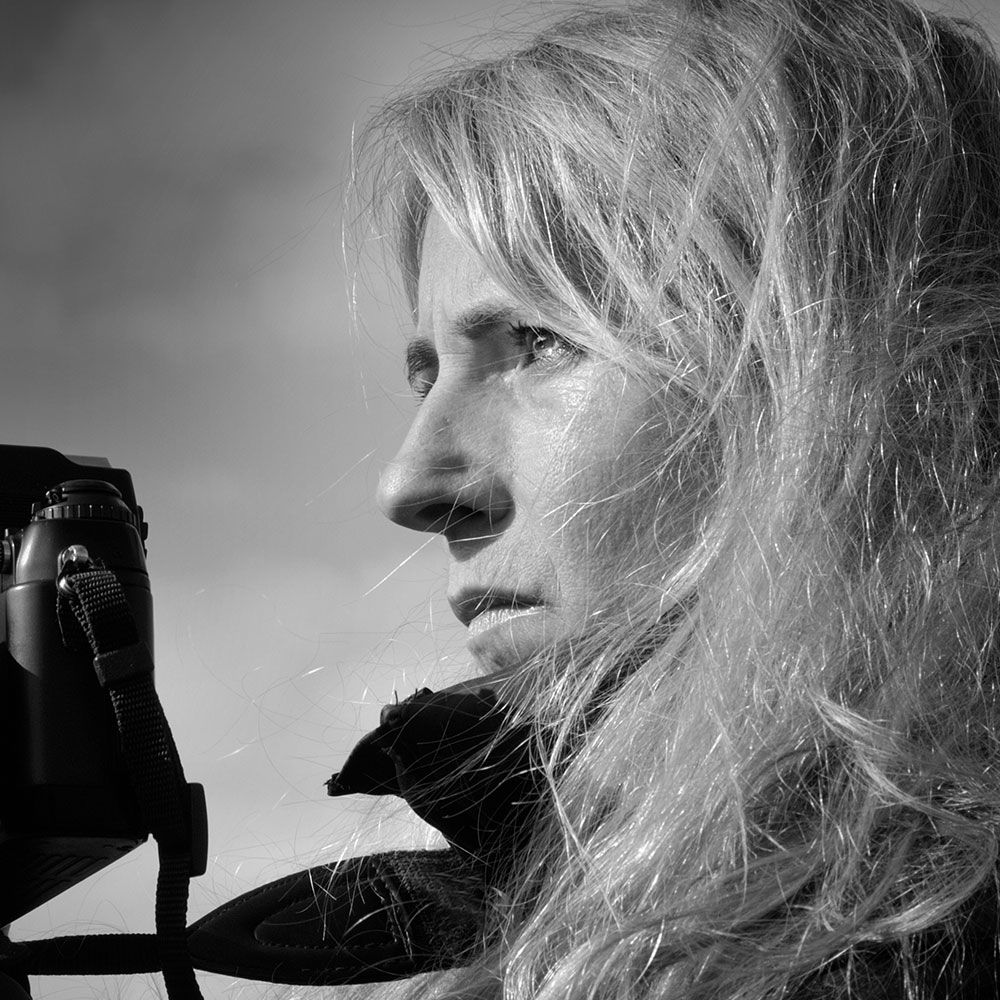
Britta Jaschinski is an award-winning wildlife photojournalist whose investigative work focuses on the intersection of environmental destruction, wildlife crime and human responsibility. By working closely with law enforcement agencies, forensic scientists and conservation organizations, she is able to produce photographs that serve as evidentiary records as well as powerful tools for public accountability.
Wildlife DNA and molecular detection
Leibniz Institute for the Analysis of Biodiversity Change, Hamburg, Germany
Recent advances in molecular biology are creating new ways to combat wildlife trafficking. Here, a DNA sequencing machine lights up as it analyzes seized wildlife material. This process can identify the species of origin from fragments of tissue, bone or derivative products. In molecular laboratories, confiscated items are tested and identified before being registered in global databases. The results are crucial for law enforcement, as traffickers often claim that wildlife products, such as rhino horn or elephant tusks, have been mislabelled, or that animals stolen from the wild were bred in captivity, in order to escape prosecution.

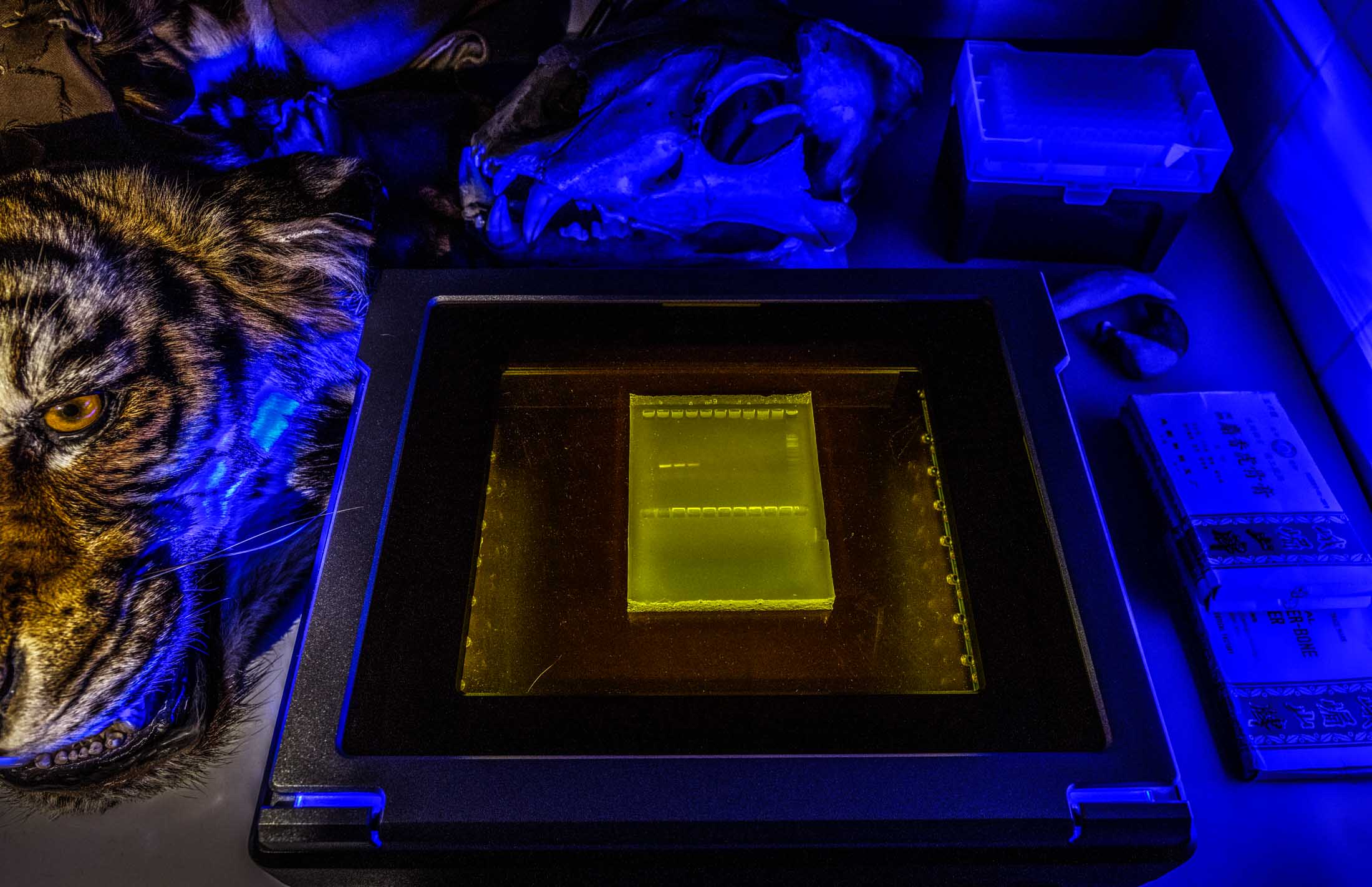
©Britta Jaschinski WILDLIFE DNA - MOLECULAR LAB - The DNA sequencing machine lights up to indicate it’s in progress, as it determines a species’ identity from seized material. DNA testing at the molecular laboratory, in which confiscated wildlife products and the species of derivative items are determined and registered. The information is stored in a global data bank. The investigative questions to address in relation to the identification of animals and plants, or their parts and derivatives, can generally be categorised into five groups, concerning: the species involved, geographic origin, captive or cultivated, age of specimen. The Leibniz Institute for the Analysis of Biodiversity Change (LIB), Hamburg, Germany, Europe
©Britta Jaschinski WILDLIFE DNA - MOLECULAR LAB - The DNA sequencing machine lights up to indicate it’s in progress, as it determines a species’ identity from seized material. DNA testing at the molecular laboratory, in which confiscated wildlife products and the species of derivative items are determined and registered. The information is stored in a global data bank. The investigative questions to address in relation to the identification of animals and plants, or their parts and derivatives, can generally be categorised into five groups, concerning: the species involved, geographic origin, captive or cultivated, age of specimen. The Leibniz Institute for the Analysis of Biodiversity Change (LIB), Hamburg, Germany, Europe

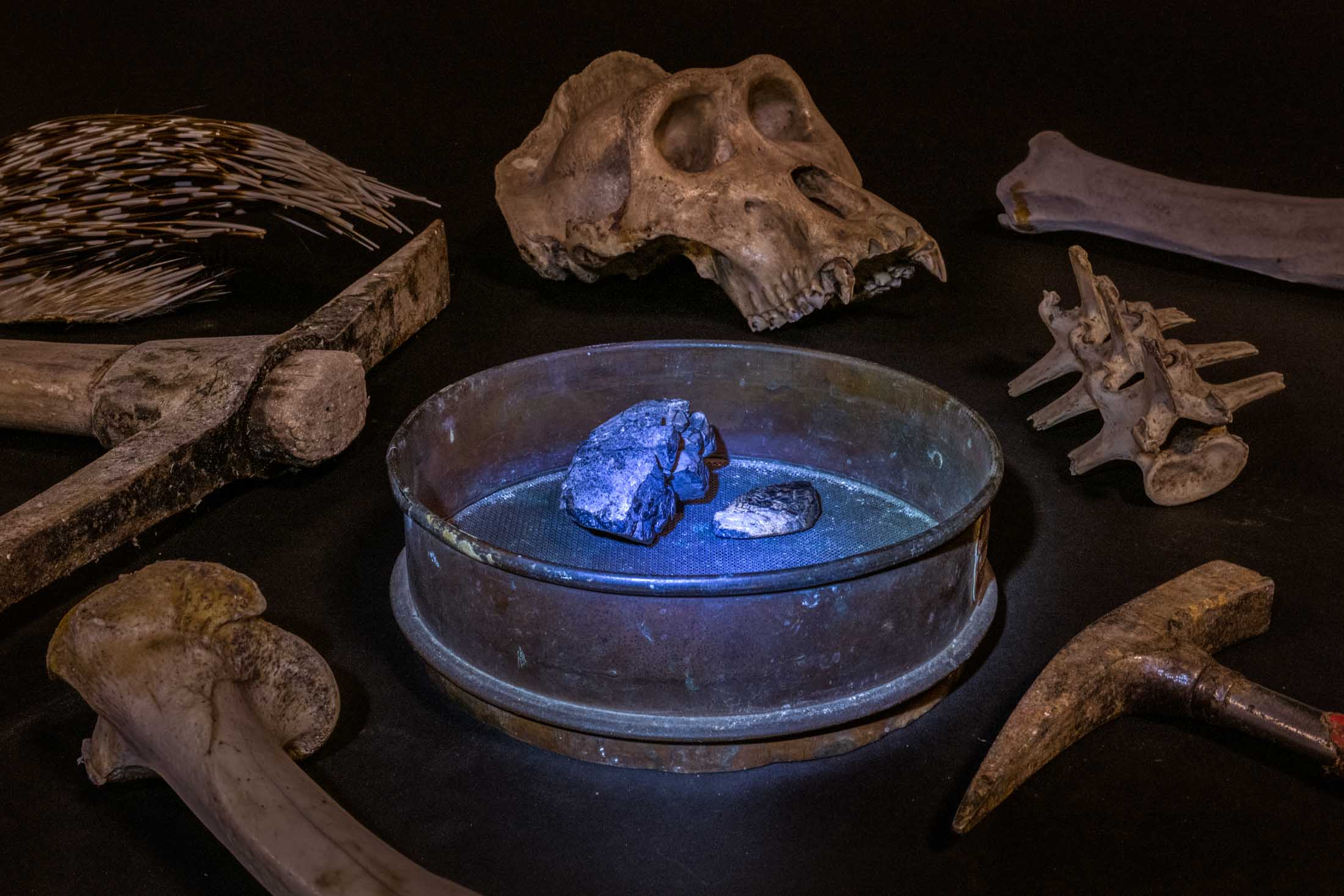
©Britta Jaschinski COLTAN MINING & WILDLIFE TRADE - Glowing, in blue torch light, coltan, a metallic ore is a component of phone and laptop batteries. Surrounded by mining tools and the remains of one animal mostly affected by the industry: a gorilla skull, vertebrae, leg bone. Coltan is extracted from the riverbeds of the Democratic Republic of the Congo by poorly paid miners who hunt wild animals for food. This threatens the future of the country’s gorillas and has led to an increased risk of viruses jumping to humans. Scientist believe that the consumptions of nonhuman primates is most likely to be the source of the HIV, the Ebola virus and monkeypox. Beyond this tragic development, entire gorilla families and communities are wiped out to steal young gorillas to serve as pets for the exotic pet trade. The Leibniz Institute for the Analysis of Biodiversity Change (LIB), Hamburg, Germany, Europe
©Britta Jaschinski COLTAN MINING & WILDLIFE TRADE - Glowing, in blue torch light, coltan, a metallic ore is a component of phone and laptop batteries. Surrounded by mining tools and the remains of one animal mostly affected by the industry: a gorilla skull, vertebrae, leg bone. Coltan is extracted from the riverbeds of the Democratic Republic of the Congo by poorly paid miners who hunt wild animals for food. This threatens the future of the country’s gorillas and has led to an increased risk of viruses jumping to humans. Scientist believe that the consumptions of nonhuman primates is most likely to be the source of the HIV, the Ebola virus and monkeypox. Beyond this tragic development, entire gorilla families and communities are wiped out to steal young gorillas to serve as pets for the exotic pet trade. The Leibniz Institute for the Analysis of Biodiversity Change (LIB), Hamburg, Germany, Europe
The ecological impact of illicit mining
Leibniz Institute for the Analysis of Biodiversity Change, Hamburg, Germany
A lump of coltan, illuminated by blue light, lies among mining tools and the skeletal remains of a gorilla. Coltan is a rare and valuable metallic ore that is crucial for modern electronics such as batteries for phones, laptops and electric vehicles. In the Democratic Republic of the Congo, the world’s largest coltan producer, mining activities have led to widespread habitat destruction. Poorly paid miners also often engage in illegal bushmeat hunting. These activities have devastated gorilla populations, and increase the risk of zoonotic diseases being transmitted to humans.
An environmental arms race
Leibniz Institute for the Analysis of Biodiversity Change, Hamburg, Germany
The violence of the rhino trade is laid bare. X-rays reveal the high-calibre bullets and leg snares poachers use to kill or subdue the animals before removing their horns. A jar made from the foot of a rhino calf and a liquid sold as medicine, based on myths about the horn’s curative powers, illustrate the range of products derived from a single killing. In South Africa, two-thirds of the rhino population was destroyed between 2006 and 2024. In response to this threat, several reserves have started using AI-enabled tracking collars. These devices learn the behaviour of individual animals, enabling the detection of distress or poaching attempts in real time.
* X-rays donated by Dr Johan Marais of Saving the Survivors

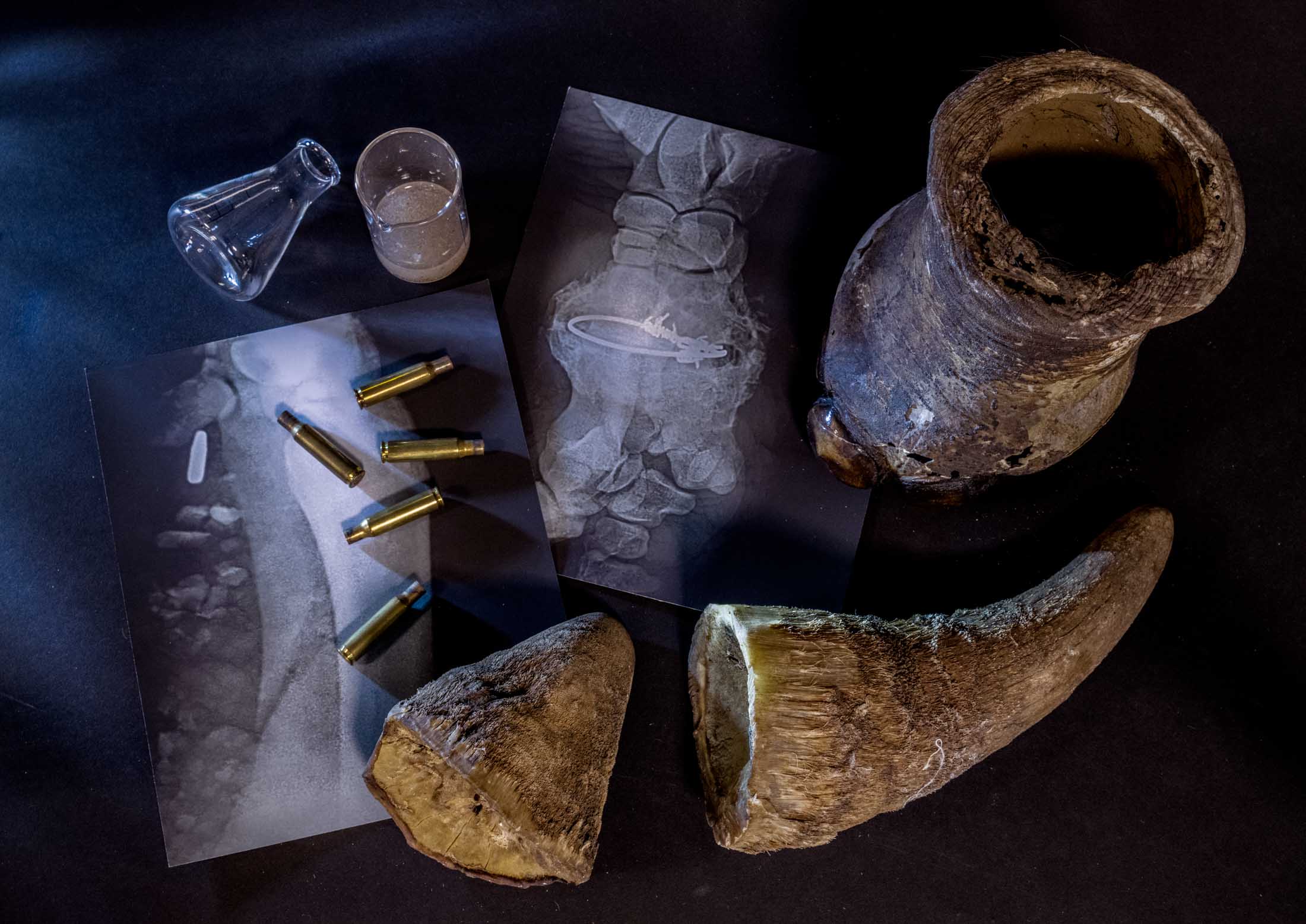
©Britta Jaschinski THE EVIDENTIAL PIECES OF A TRADE - Rhino horns are brutally removed after the animals are immobilised - shot or snared. The tools of the rhino trafficking trade include high-caliber bullets and leg snares (seen here on x-rays)—and even occasional fake horns to trick buyers. A jar (upper right) is made from a rhino calf’s foot, while a glass beaker holds a confiscated liquid, yet to be tested, sold on the black market as medicine. One X-ray shows a bullet lodged in the leg of a rhino, the other reveals the snare that became embedded in the leg of a juvenile. Rhino horn is used in traditional Chinese medicine, but consumption is also about wealth and status. Rhino horn is used in TCM and to be drunk as an aphrodisiac, or to treat rheumatism, gout, even a hangover. Others believe rhino horn cures cancer. Some parts of the rhino are ornamental and sold as souvenirs. The X-RAYS were donated by vet Dr Johan Marais. The Leibniz Institute for the Analysis of Biodiversity Change (LIB), Hamburg, Germany, Europe
©Britta Jaschinski THE EVIDENTIAL PIECES OF A TRADE - Rhino horns are brutally removed after the animals are immobilised - shot or snared. The tools of the rhino trafficking trade include high-caliber bullets and leg snares (seen here on x-rays)—and even occasional fake horns to trick buyers. A jar (upper right) is made from a rhino calf’s foot, while a glass beaker holds a confiscated liquid, yet to be tested, sold on the black market as medicine. One X-ray shows a bullet lodged in the leg of a rhino, the other reveals the snare that became embedded in the leg of a juvenile. Rhino horn is used in traditional Chinese medicine, but consumption is also about wealth and status. Rhino horn is used in TCM and to be drunk as an aphrodisiac, or to treat rheumatism, gout, even a hangover. Others believe rhino horn cures cancer. Some parts of the rhino are ornamental and sold as souvenirs. The X-RAYS were donated by vet Dr Johan Marais. The Leibniz Institute for the Analysis of Biodiversity Change (LIB), Hamburg, Germany, Europe

©Britta Jaschinski
©Britta Jaschinski
A success in forensic detail
CITES Border Force, Heathrow International Airport, London, United Kingdom
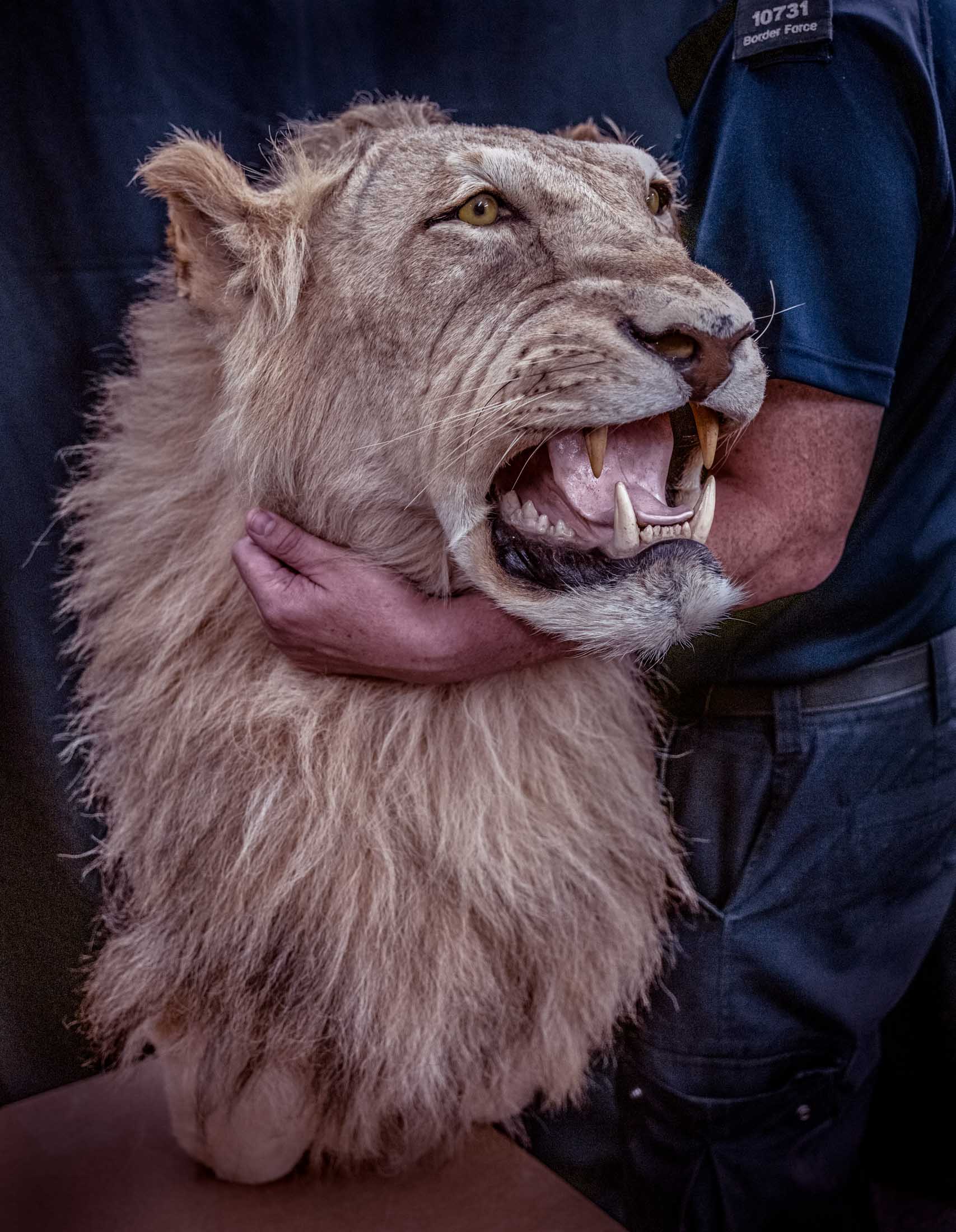
Operation Thunder, an annual law-enforcement initiative targeting wildlife crime, led to the seizure of 30 tonnes of endangered species products and nearly 30 000 live animals across 134 countries in 2025. Confiscated items included animal trophies such as this lion’s head, as well as ivory, rhino horns, turtle eggs, primates, birds and marine animals – all threatened species and protected under CITES. Since its launch in 2017, Operation Thunder, which is led by INTERPOL and the World Customs Organization, has achieved record levels of international participation, highlighting the scale of wildlife crime and the growing importance of forensic intelligence in border enforcement.
Science leaves an impression
CITES Border Force, Heathrow International Airport, London, United Kingdom
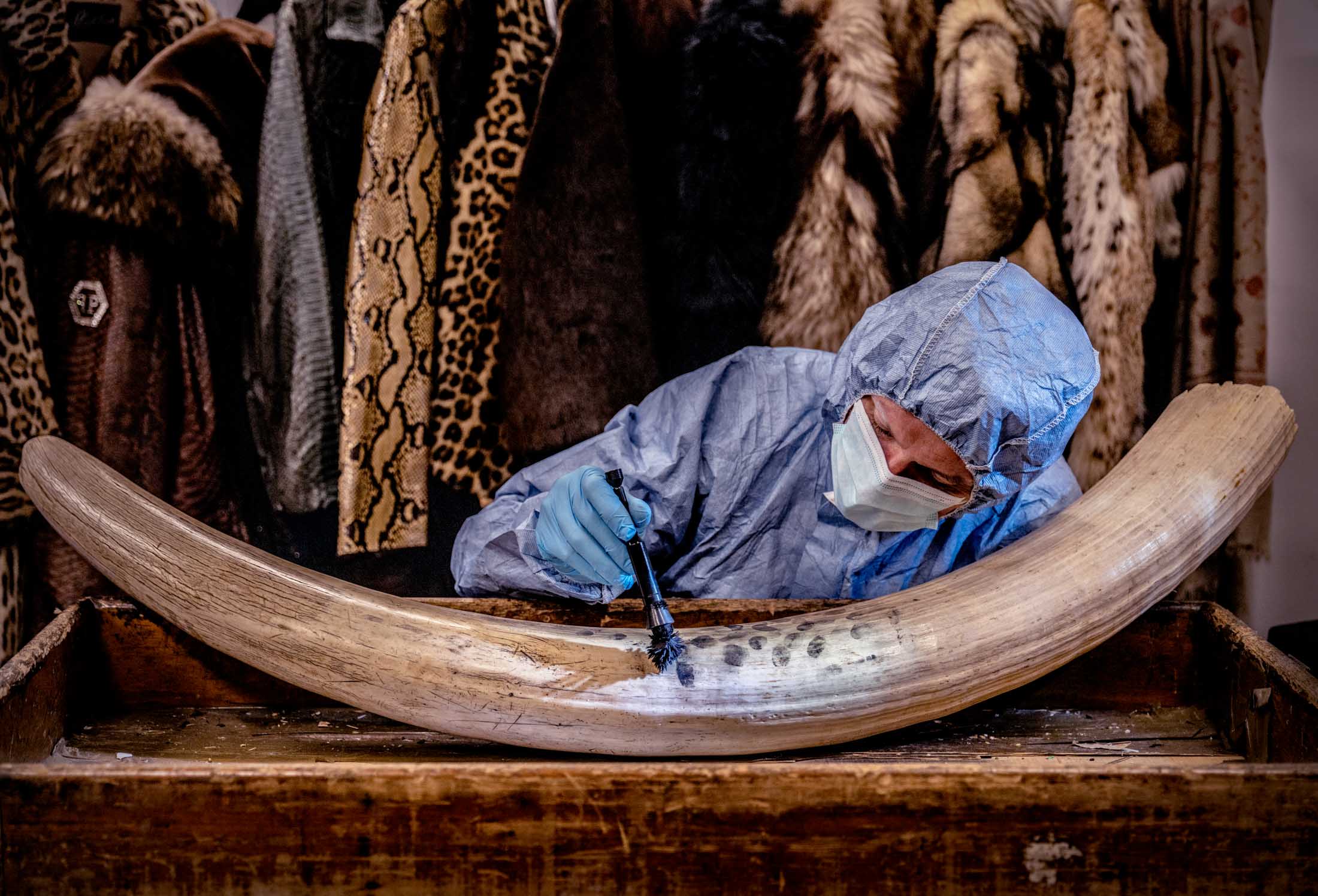
Recovering fingerprints from ivory was once considered impossible, as the porous nature of the material absorbs oils, causing prints to disappear within 24 hours. In 2015, however, a collaboration between London’s Metropolitan Police and scientists at King’s College London led to a forensic innovation: a magnetic powder capable of lifting fingerprints up to 28 days after contact. Trial kits were used to secure evidence in Kenya in 2017, resulting in 15 arrests, including five police officers, and the seizure of 11 tusks. The method is also effective on rhino horn, pangolin scales, tiger claws and other trafficked wildlife products, providing a low-cost, field-ready forensic solution where DNA testing is not feasible.

©Britta Jaschinski
©Britta Jaschinski
©Britta Jaschinski
©Britta Jaschinski
Evidence under a new light
ZSL Wildlife Forensic Laboratory, London, United Kingdom
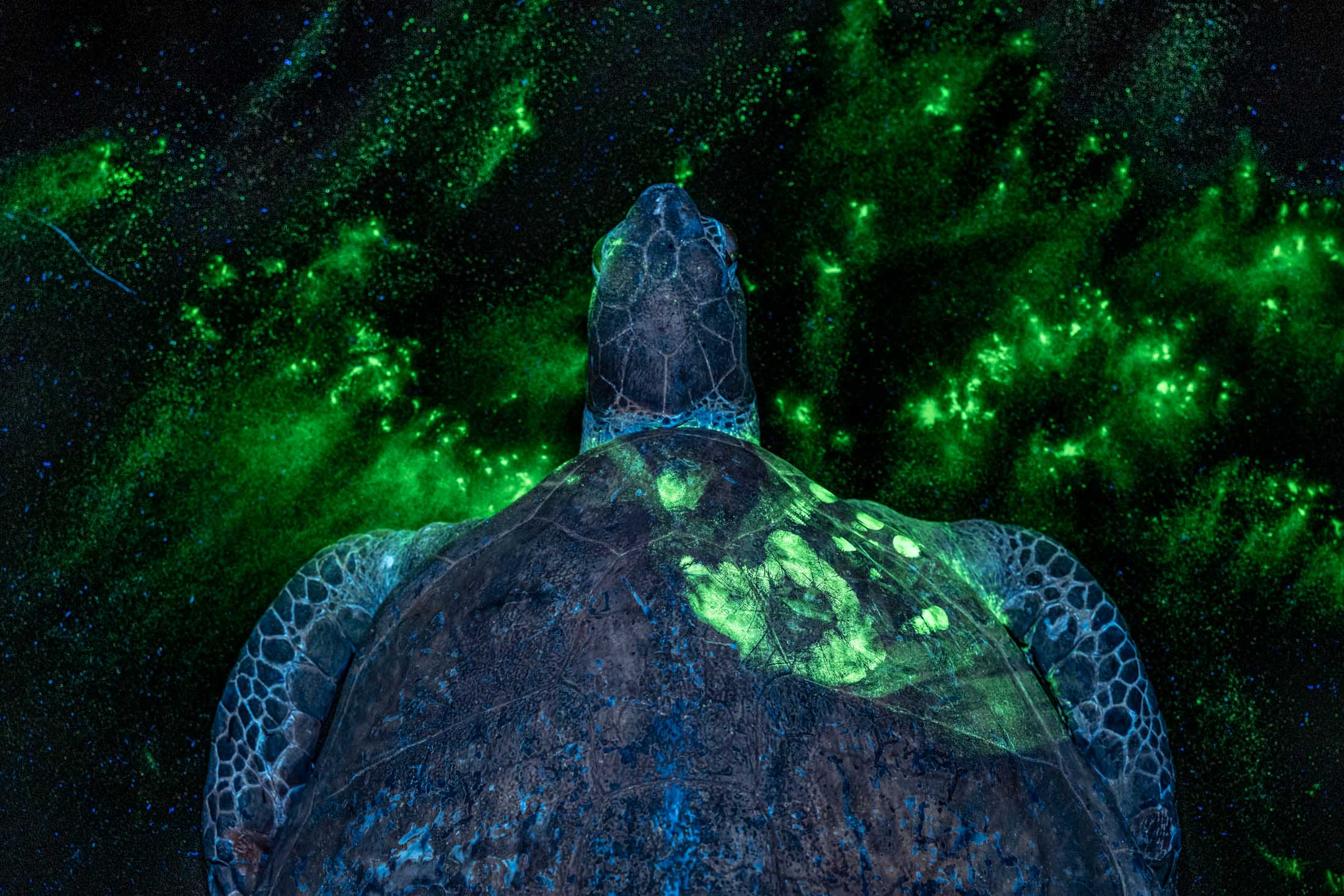
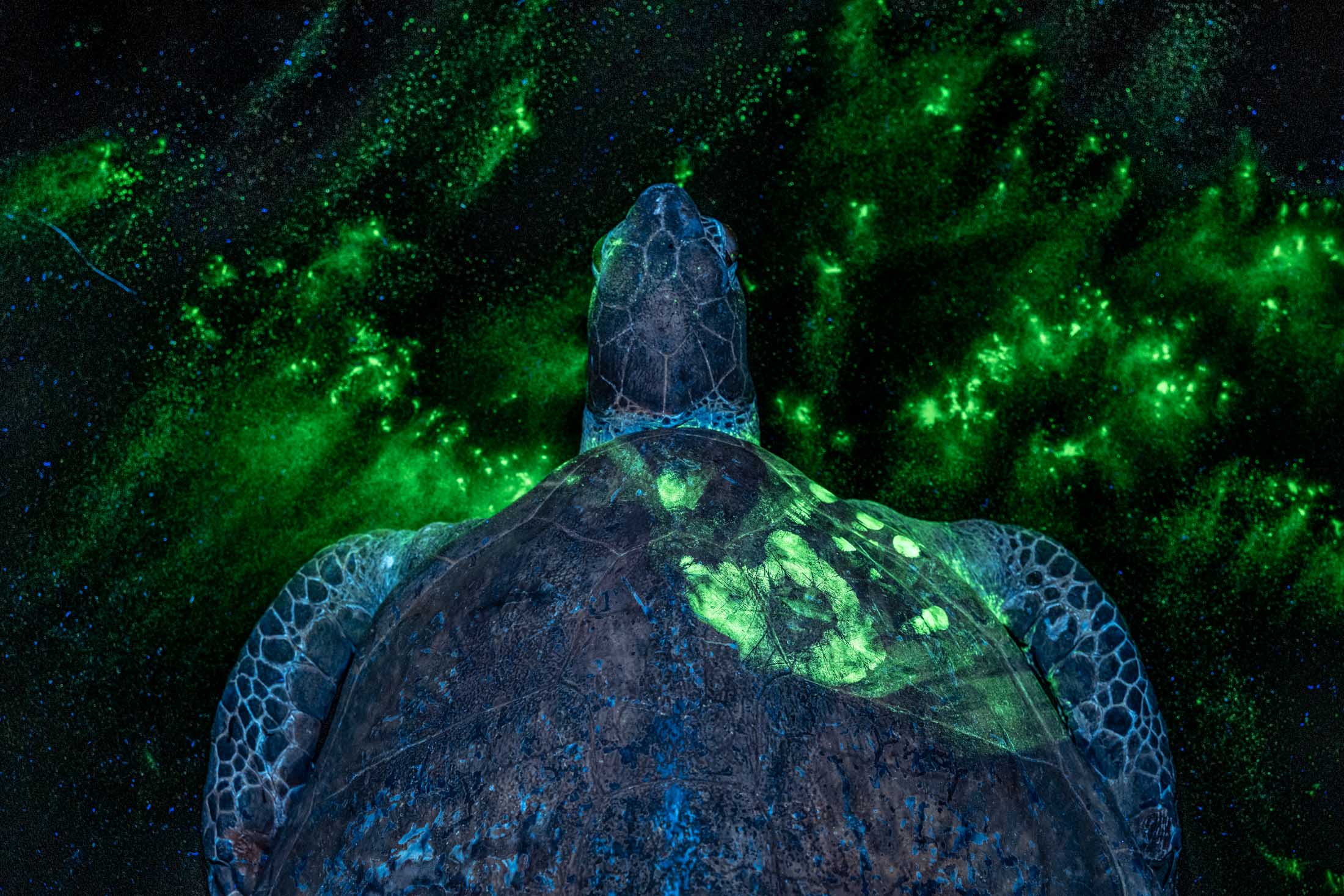
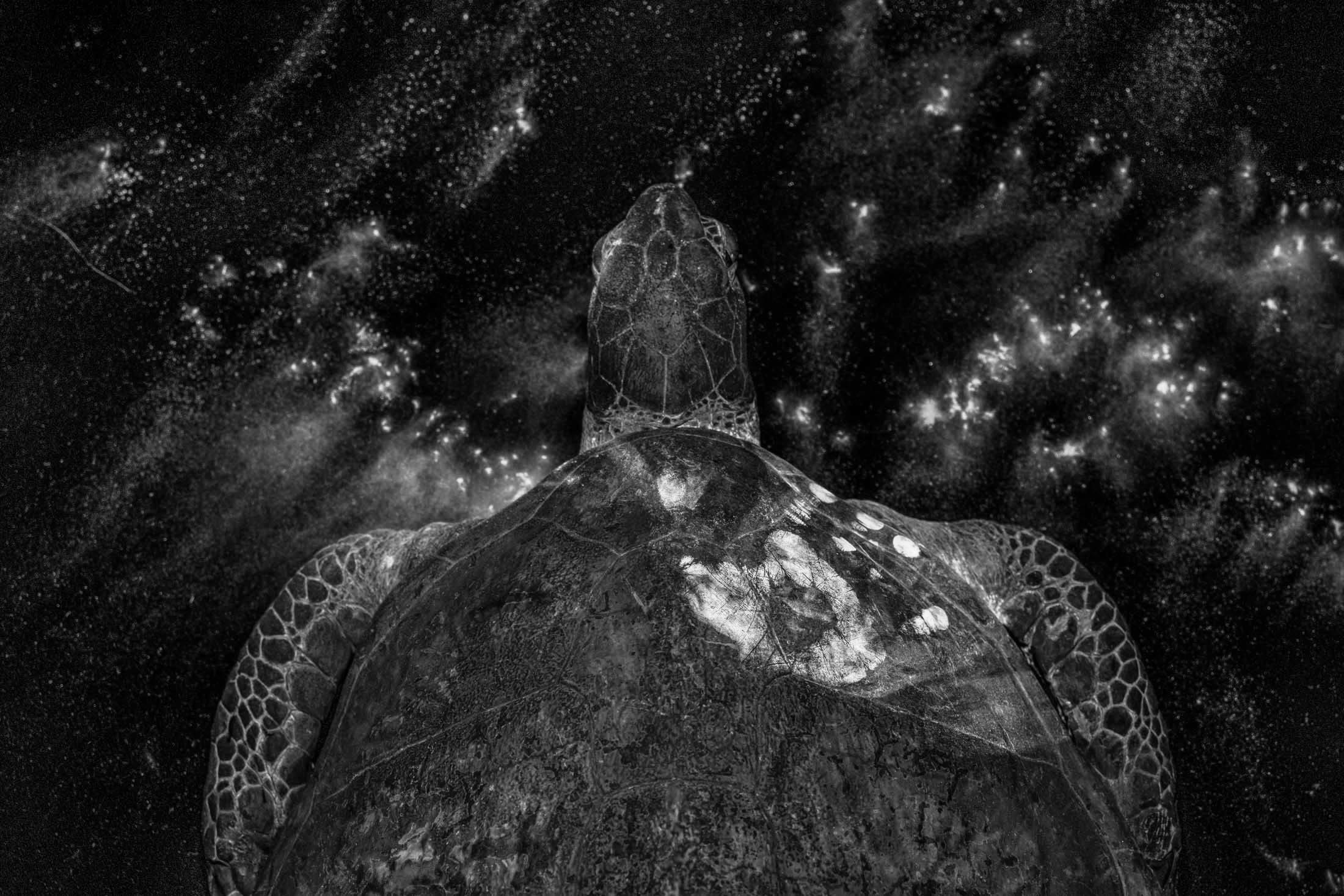
At first glance, this image appears to show a green sea turtle (Chelonia mydas) swimming in the water. Under ultraviolet light, however, a newly developed fluorescent powder reveals a hidden human handprint. This method allows forensic experts to detect fingerprints, blood, bodily fluids, gunshot residue and other trace evidence during wildlife seizures, with remarkable detail. Six of the world’s seven sea turtle species are threatened, endangered or critically endangered due to human activity. These techniques help identify poachers and traffickers, provide critical evidence to support law enforcement investigations, and ultimately lead to the disruption and dismantling of illegal wildlife trade networks.

Website and contact
Do you have data you’d like to add to our online wildlife trafficking database? Would you like to disseminate our stories of green corruption? Or replicate our community engagement dialogues? Get in touch to connect.
 Built with Shorthand